Compaction
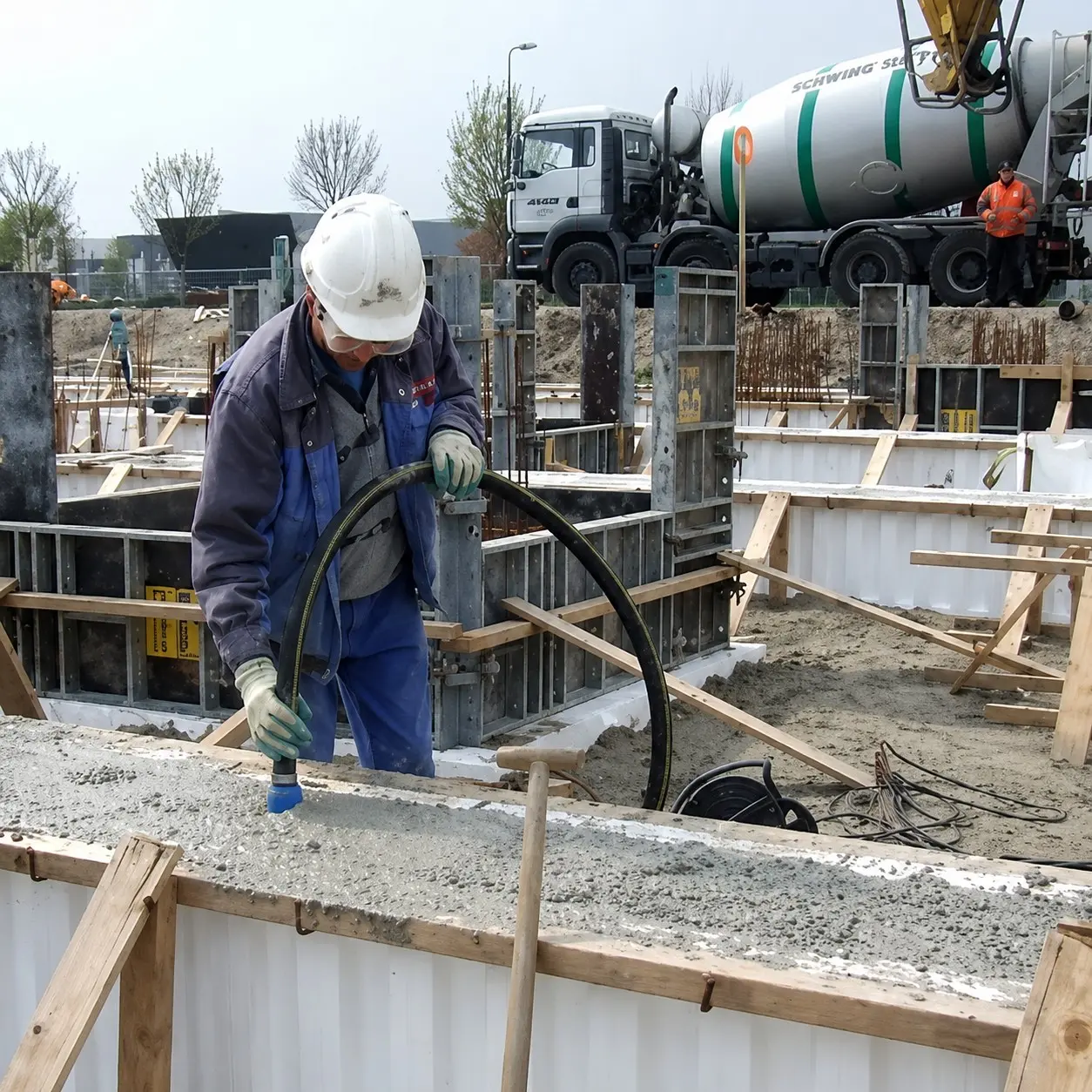
To compact concrete with a poker vibrator, plunge the running head vertically into the fresh pour, hold it in place for about 5–15 seconds until air bubbles stop rising, then withdraw it slowly and repeat at points roughly 50 cm apart. This drives out trapped air so the mix settles densely around the reinforcement, giving stronger, more durable concrete with no honeycombing.
Freshly placed concrete carries a large volume of trapped air — often 5–20% by volume. If that air stays in the mix, it sets as voids and honeycombing: weak spots that reduce strength, let water and chlorides in, and shorten the life of the structure. Compaction uses vibration to briefly liquefy the concrete so the trapped air rises out and the cement paste flows fully around the reinforcement and into the corners of the formwork. The result is denser, stronger, more durable concrete and a cleaner finished surface. At Lievers we've designed and built concrete compaction machinery in Mijdrecht, the Netherlands, since 1954, and the method below is how we recommend getting it right.
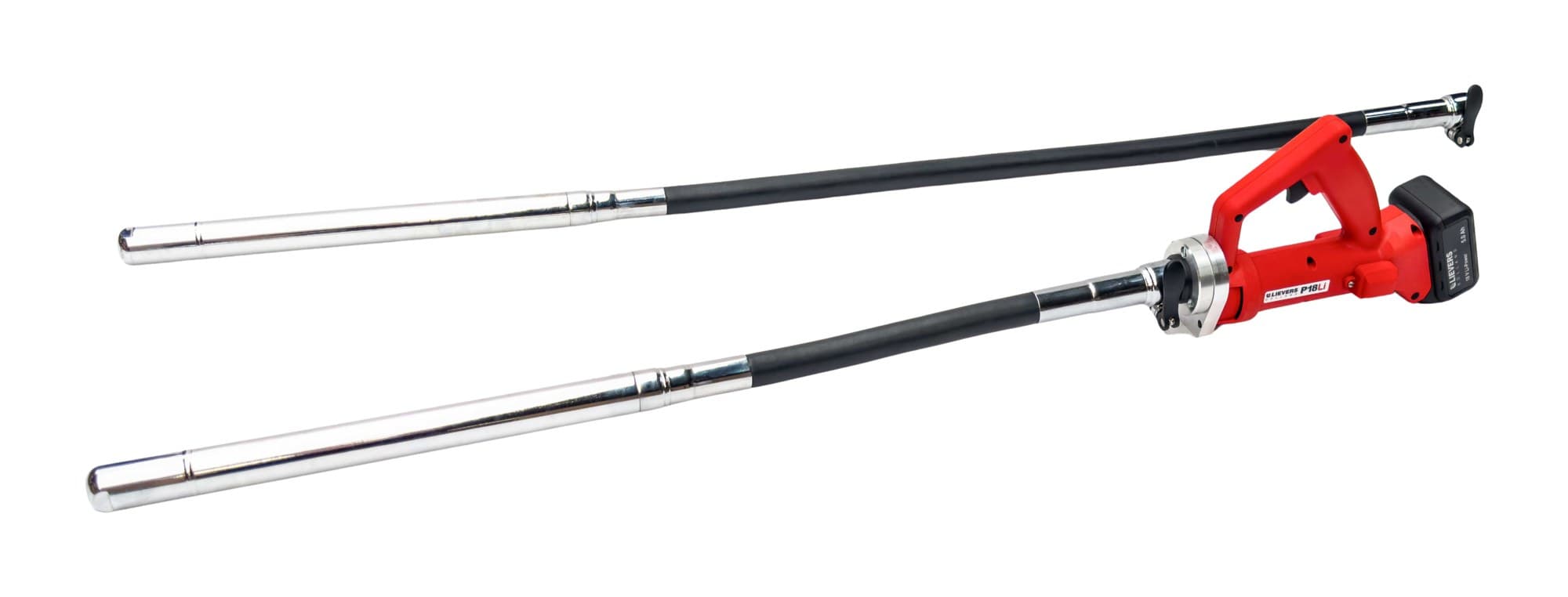
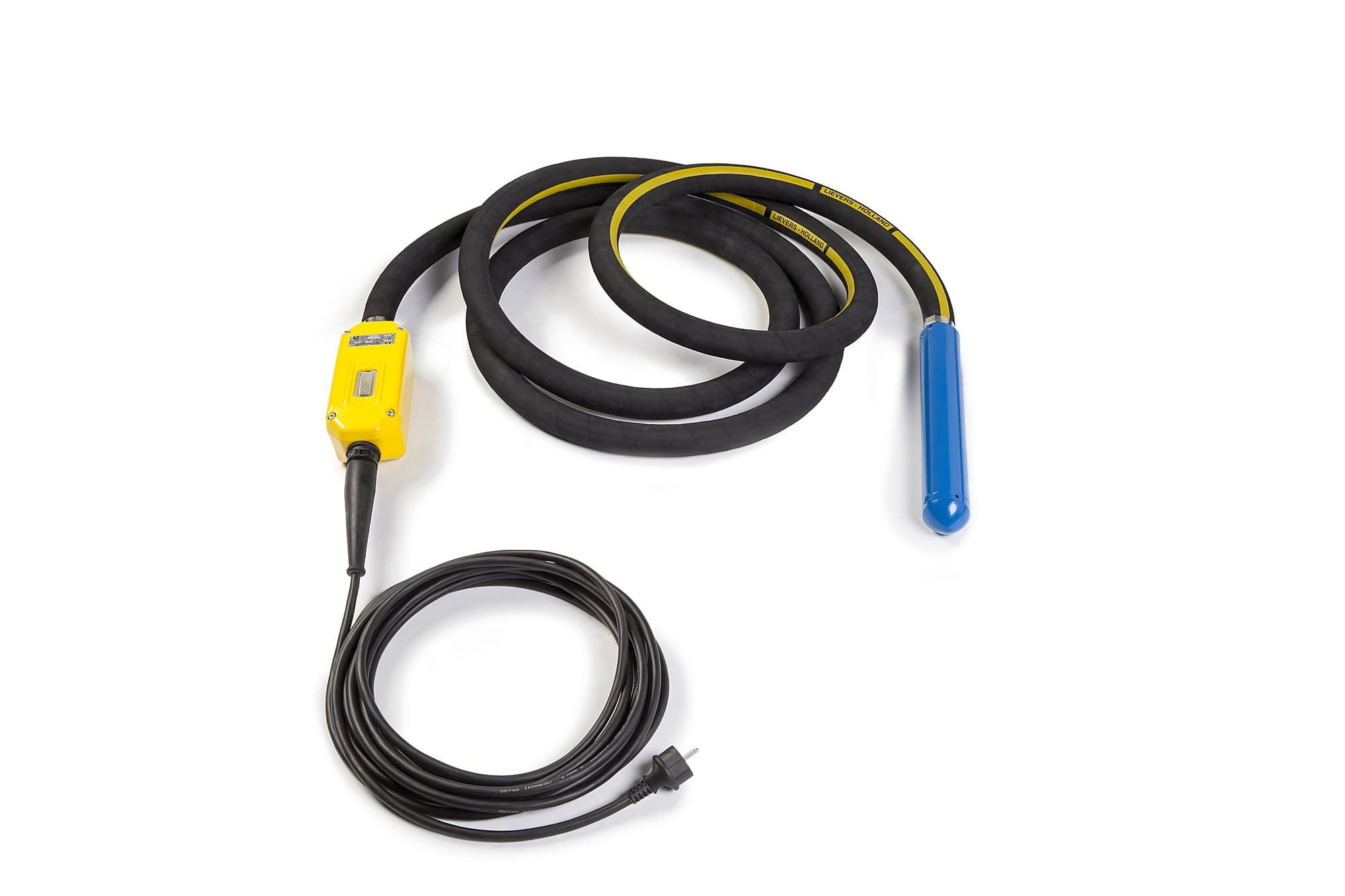
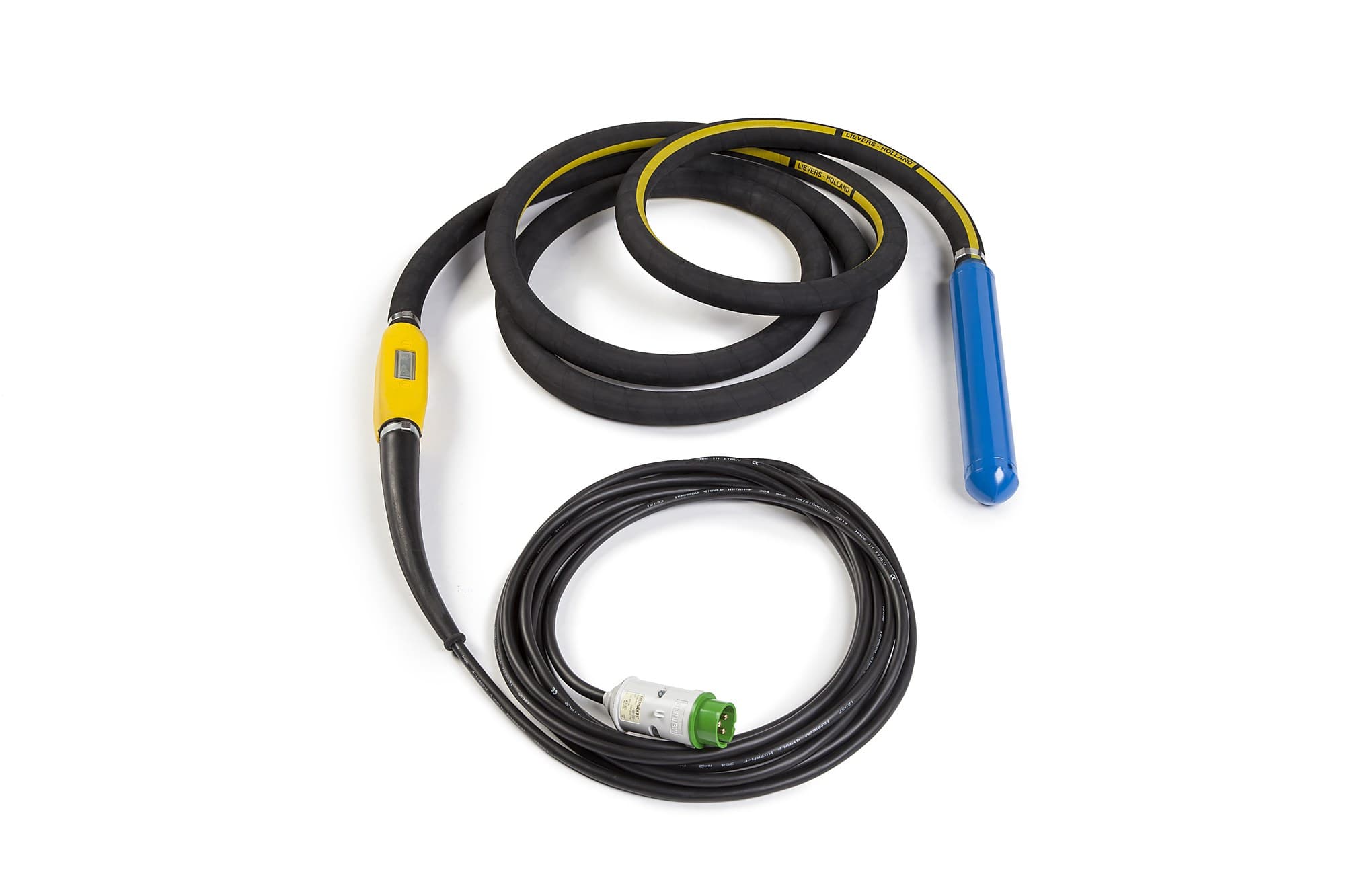
A poker vibrator — also called an internal, immersion or needle vibrator — is the most common tool for compacting structural concrete. A vibrating steel head (the "poker" or "bottle") on the end of a flexible hose is immersed directly into the pour. Lievers poker vibrators — from the cordless, battery-powered P18Li to mains-powered high-frequency models — run at around 12,000 vibrations per minute; that energy passes straight into the concrete and shakes the trapped air free. Because the vibration works from inside the mix, a poker is far more effective for walls, columns, foundations and thick slabs than surface methods alone.
Most insertions need only 5–15 seconds. The concrete itself tells you when it's done: the air bubbles stop, a sheen of paste appears at the surface, and the vibrator note evens out. Stopping too early leaves voids and honeycombing. Vibrating too long is just as damaging — it causes segregation, where the heavy aggregate sinks and a weak layer of water and fine paste rises to the top. When in doubt, vibrate each point only until the bubbles stop, then move on.
Match the head diameter to the pour. Smaller heads (around 28 mm) are ideal for thin sections, heavily reinforced elements and precast work where access is tight; larger heads (38–45 mm and up) move more concrete per insertion and suit mass pours and foundations. As a guide, the action zone of a single insertion ranges from roughly 45 cm across for a small head up to about 85 cm for a large one — which is why ~50 cm spacing gives good overlap for typical site pokers. For sites without power, a cordless battery poker like the P18Li keeps you working anywhere; for continuous mains work, a high-frequency poker with an integrated inverter runs straight off a single-phase socket with no separate converter.
Poker vibrators transmit strong hand-arm vibration, so wear anti-vibration gloves along with ear protection, eye protection, a hard hat and safety boots. Plan the work around daily vibration-exposure limits — rotate operators on long pours rather than letting one person run the poker for hours — and never operate in an explosive atmosphere.
Free advice
Our engineers in Mijdrecht think along about machine choice, concrete and planning — answer within one working day.
About the author
Lievers Holland has designed and manufactured concrete compaction and finishing machinery in Mijdrecht, the Netherlands, since 1954. Our guides are written by the same engineering team that builds the machines.
Usually 5–15 seconds per insertion. Hold the head in place until the large air bubbles stop rising and a thin film of cement paste appears around it, then withdraw slowly. Vibrating much longer than this risks segregation, where the aggregate sinks and a weak, watery layer rises to the surface.
About 50 cm for a typical site poker, so that the vibrated zones overlap and no concrete is left uncompacted. A single insertion has an action zone of roughly 45–85 cm across depending on head diameter, so larger heads can be spaced a little wider and smaller heads a little closer.
Yes. Over-vibration causes segregation: the heavy stone settles to the bottom while water and fine paste rise to the top, leaving a weak, dusty surface layer. Signs you've gone too far are a growing pool of paste and water at the surface and the aggregate disappearing from view. Vibrate only until the air bubbles stop.
Most structural concrete — walls, columns, foundations, thick slabs — should be compacted with a poker vibrator to reach full strength and durability. The exception is self-compacting concrete (SCC), which is designed to flow and de-air under its own weight and must not be vibrated.
Match the head diameter to the element. Around 28 mm suits thin, congested or precast sections; 38–45 mm and larger heads compact more concrete per insertion for mass pours and foundations. Bigger heads cover a wider action zone but weigh more and produce more vibration, so also consider run time and operator comfort.
A poker (internal) vibrator compacts concrete in depth — through the full thickness of walls, columns and slabs. A vibrating screed or beam works the top surface of a slab to compact and level it. On floor pours the two are used together: the poker consolidates the depth, then the screed finishes the surface.