

Machines
Form-mounted external vibrators and vibrating tables.
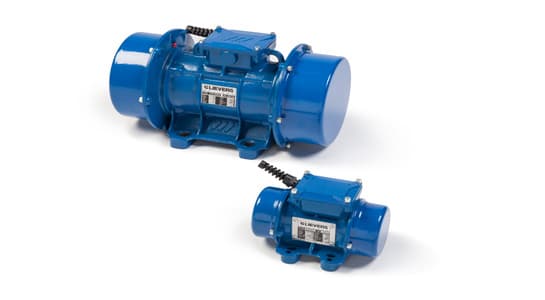
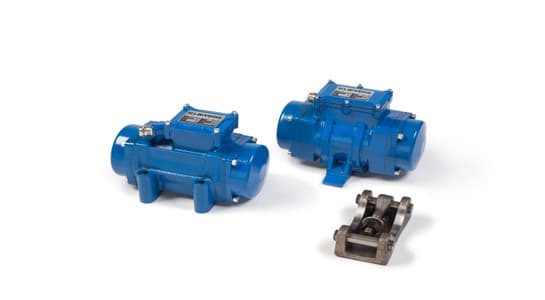
An external vibrator compacts concrete from outside the mould. Bolted to formwork or built into a vibrating table, it transmits vibration through the form so the mix settles dense and air-free — the standard method in precast production and anywhere a poker cannot reach. Across the ETR, ETRS, HTR, HTRS and LVS ranges, centrifugal force runs from 0.66 kN up to 36.20 kN.
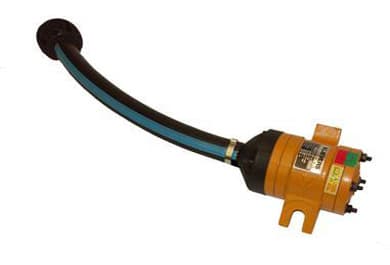
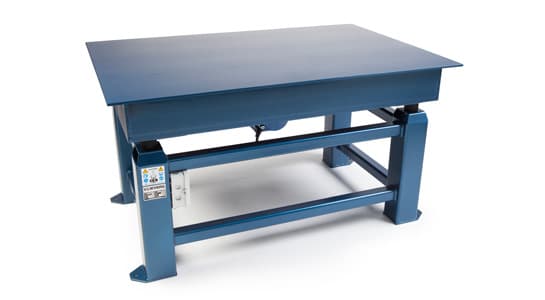
Lievers external vibrators mount to moulds and formwork for walls, columns and precast elements. Vibrating tables carry the mould itself, compacting product after product with repeatable results — the backbone of precast, refractory and concrete-product production lines. Standard ETR/ETRS electric vibrators cover 0.66–20.02 kN of centrifugal force at 4.5–47 kg, HTR/HTRS high-frequency units run at 6,000 rpm up to 19.50 kN, and pneumatic LVS/LVSH/LVSK vibrators reach 9,000–15,500 rpm.
In production, consistency is everything: identical vibration time and force per element means identical quality per element. Our specialists dimension vibrator count, placement and frequency to your mould so the first product and the thousandth compact the same. LTT vibrating tables carry tops from 40 x 40 cm up to 120 x 180 cm, matched to the mould with the right vibrator and frequency.
An external vibrator attaches to the outside of a mould or formwork and transmits vibration through it into the concrete. It is used where internal pokers cannot reach — precast moulds, thin walls, congested reinforcement. Lievers ETR/ETRS models span 0.66–20.02 kN of centrifugal force.
A vibrating table compacts concrete products in their moulds: precast elements, refractory shapes, concrete goods. The mould sits on the vibrating deck, air is driven out, and every product gets the same repeatable compaction. LTT tables are available from 40 x 40 cm up to 120 x 180 cm table tops.
It depends on mould size, wall thickness and mix. As a rule, vibrators are spaced so their effective ranges overlap over the full form surface. We help dimension count, position and frequency per mould. HTR/HTRS units run at 6,000 rpm with up to 19.50 kN of force, giving a wide range to match mould size.