Compaction
A poker vibrator is a handheld tool that compacts fresh concrete from the inside: a vibrating steel head on the end of a flexible hose is immersed in the pour, where its high-frequency vibration drives out trapped air. Also called an internal, immersion or needle vibrator, it is the standard way to consolidate structural concrete so it sets dense, strong and free of voids.
When fresh concrete is placed, it holds a surprising amount of trapped air — often 5 to 20 percent by volume. Left in the mix, that air sets as voids and honeycombing: weak spots that cut strength, let water and chlorides reach the reinforcement, and shorten the life of the structure. An internal vibrator is the tool that removes it. A vibrating steel head — usually called the poker or bottle — sits on the end of a flexible hose and is plunged straight into the pour, so the vibration works from within the concrete rather than from the surface. Depending on region and trade you will hear it called a concrete poker, poker vibrator, vibrating poker, internal vibrator, immersion vibrator or needle vibrator; in other markets the same tool is a buława wibracyjna, a trilnaald or a Rüttelflasche. They all describe the same device. Lievers Holland has designed and built this kind of concrete compaction machinery in Mijdrecht, the Netherlands, since 1954.
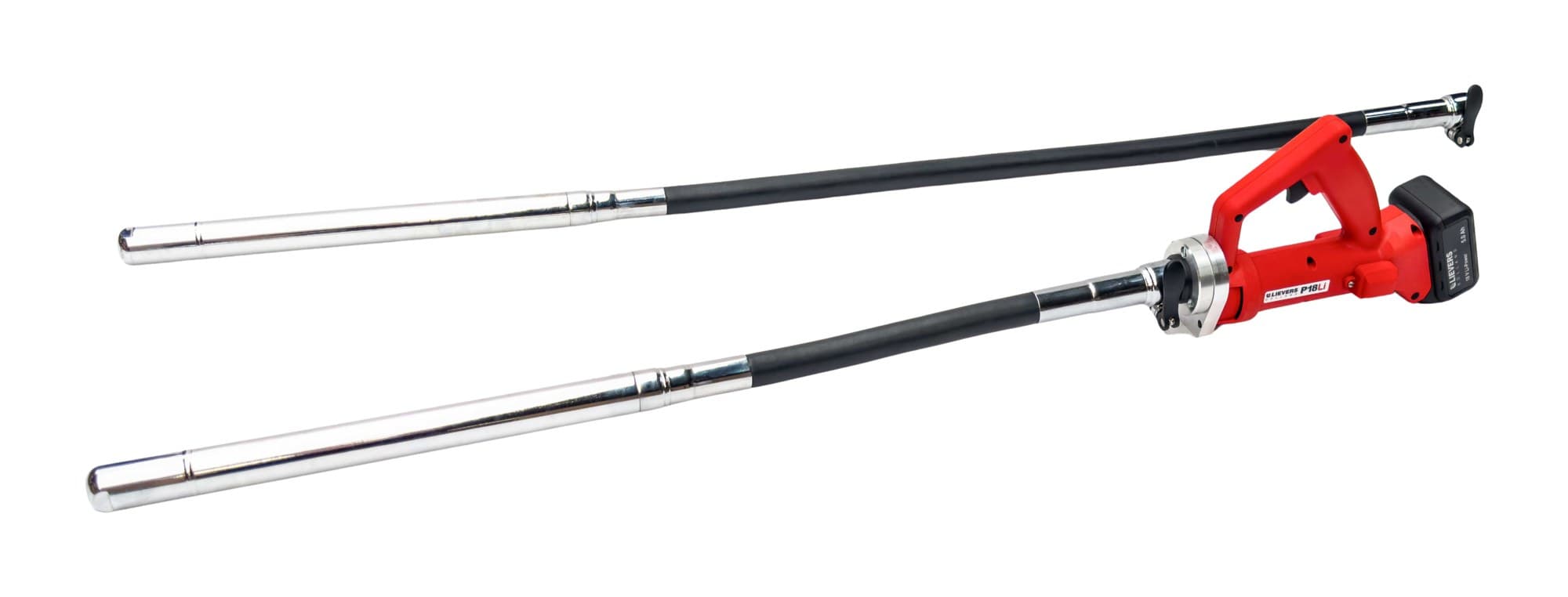
Inside the steel head, an eccentric weight or pendulum spins at high speed and strikes the inner wall of the bottle, making the whole head oscillate rapidly. A typical site poker runs at around 12,000 vibrations per minute — the Lievers P18Li, for example, vibrates at about 12,000 vpm through interchangeable 28, 38 and 45 mm heads. That energy passes straight into the surrounding concrete and briefly liquefies it, so the trapped air rises to the surface and escapes while the cement paste flows fully around the reinforcement and into the corners of the formwork. The concrete is consolidated when the large air bubbles stop rising, a thin film of paste glazes the surface around the head, and the note of the vibrator steadies. The head is then withdrawn slowly so the concrete closes behind it, and the operator moves to the next insertion point. Each insertion consolidates a roughly circular zone, so points are spaced to overlap — commonly about 50 cm apart for a typical site poker.
No — they are three names for the same tool. On British sites the everyday short form is the concrete poker or vibrating poker; manufacturers, spec sheets and hire desks often list the identical machine as a poker vibrator or immersion vibrator. Whatever the listing calls it, the parts are the same: a drive unit (battery, mains or compressed air), a flexible shaft or hose, and the vibrating poker head that goes into the fresh concrete. If you are comparing a "concrete vibrating poker" against a "poker vibrator" from another catalogue, you are comparing like with like — what matters is head diameter, frequency and how the head is powered.
Poker vibrators are grouped mainly by how the head is driven:
Within each type, different head sizes and hose lengths let you match the tool to the element being poured.
The diameter of the poker head is the main sizing decision. Common heads span roughly 25 to 65 mm, and the choice is a trade-off. A smaller head — around 28 mm — fits into thin sections, heavily reinforced elements and precast moulds where access is tight, but consolidates a narrower zone per insertion. A larger head — 45 mm and up — moves far more concrete per insertion and suits mass pours, foundations and thick walls, at the cost of extra weight and more vibration reaching the operator's hands. Head diameter also sets the compaction radius: across the Lievers high-frequency range the consolidated zone runs from about 45 cm for the smallest head up to about 85 cm for the largest, which is what determines sensible insertion spacing. Bigger is not automatically better — the right head is the one that reaches the concrete and delivers enough energy without being unwieldy.
A poker vibrator is the tool for consolidating concrete in depth: walls, columns, foundations, beams, thick slabs and most structural elements where the mix has to flow around dense reinforcement. Because it works from inside the pour, it reaches consolidation that surface methods cannot. Surface tools — such as a vibrating screed or beam — work only the top layer of a slab to compact and level it; on a floor pour the two are used together, with the poker consolidating the full depth and the screed finishing the surface. There is one important exception: self-compacting concrete (SCC) is engineered to flow and release air under its own weight, and it must not be vibrated with a poker, as that would cause segregation. For ordinary structural concrete, though, an internal poker vibrator remains the most reliable way to reach full strength and durability.
Free advice
Our engineers in Mijdrecht think along about machine choice, concrete and planning — answer within one working day.
About the author
Lievers Holland has designed and manufactured concrete compaction and finishing machinery in Mijdrecht, the Netherlands, since 1954. Our guides are written by the same engineering team that builds the machines.
A poker vibrator is a handheld tool that compacts fresh concrete from within. A vibrating steel head — the poker or bottle — on the end of a flexible hose is immersed in the pour, and its rapid vibration drives out trapped air so the concrete settles densely around the reinforcement. It is also known as an internal, immersion or needle vibrator, and it is the standard tool for consolidating structural concrete.
Inside the steel head, an eccentric weight or pendulum spins at high speed and strikes the head's inner wall, making it oscillate at around 12,000 vibrations per minute. Immersed in fresh concrete, that vibration briefly liquefies the mix so trapped air rises out and the cement paste flows around the reinforcement. When the air bubbles stop and a film of paste appears at the surface, the concrete is consolidated and the head is withdrawn slowly.
They are used to compact fresh structural concrete in depth — walls, columns, foundations, beams and thick slabs — removing trapped air that would otherwise set as voids and honeycombing. Proper internal vibration gives denser, stronger, more durable concrete and a cleaner surface. The main exception is self-compacting concrete, which is designed to de-air on its own and must not be vibrated.
They are sized mainly by head diameter, commonly from about 25 to 65 mm. Smaller heads (around 28 mm) suit thin, congested or precast sections; larger heads (38, 45 mm and up) consolidate more concrete per insertion for mass pours and foundations. Larger heads also cover a wider compaction radius — roughly 45 cm up to about 85 cm across the Lievers high-frequency range — but weigh more and transmit more vibration to the operator.
A poker (internal) vibrator is immersed directly in the concrete and consolidates it through the full depth of an element. An external or surface vibrator — such as a vibrating screed, beam or form-mounted vibrator — works from outside, treating the top surface or the formwork. Internal pokers are used for walls, columns and thick pours; surface tools finish and level slabs. On floor work the two are commonly combined.
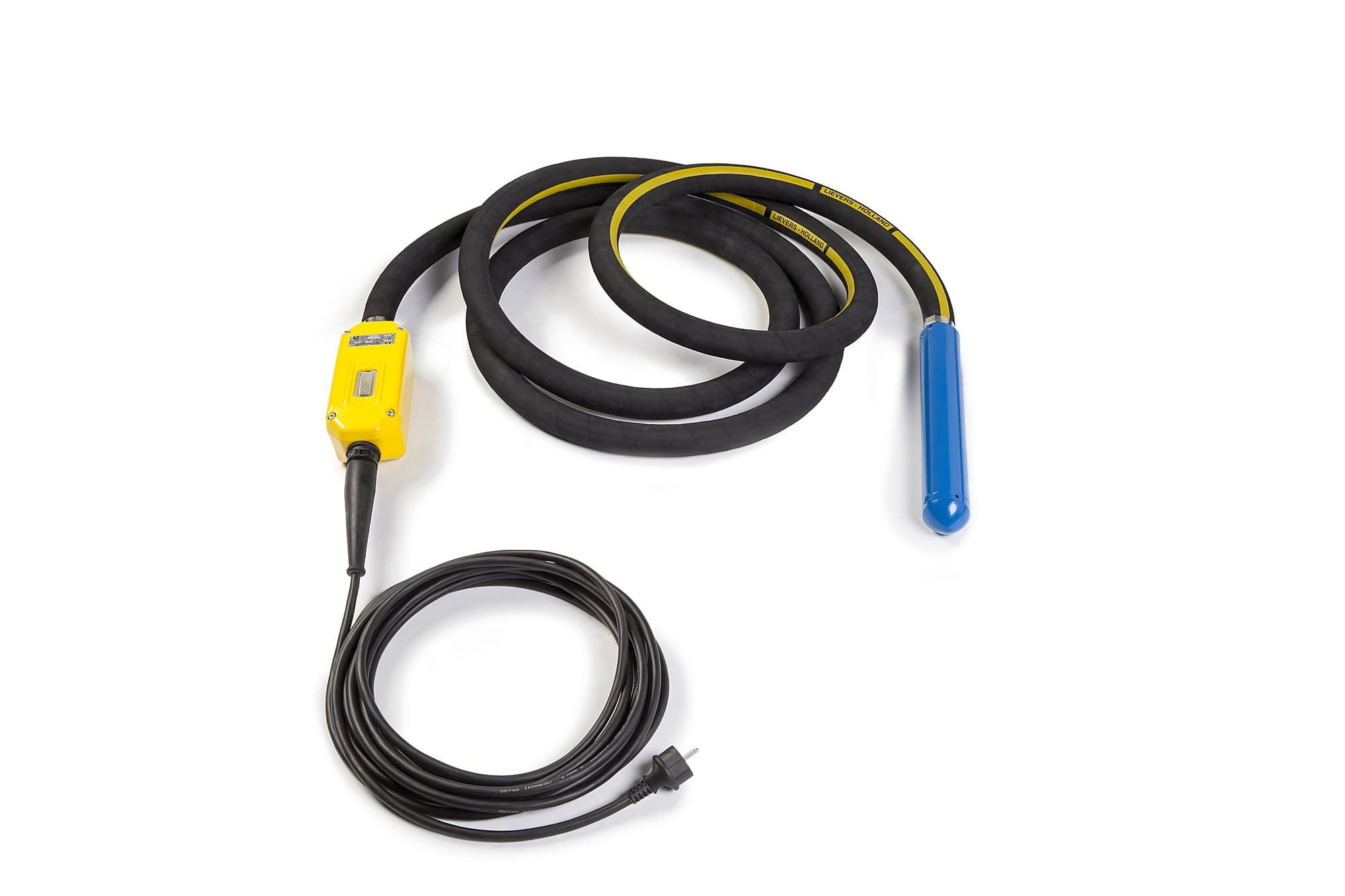
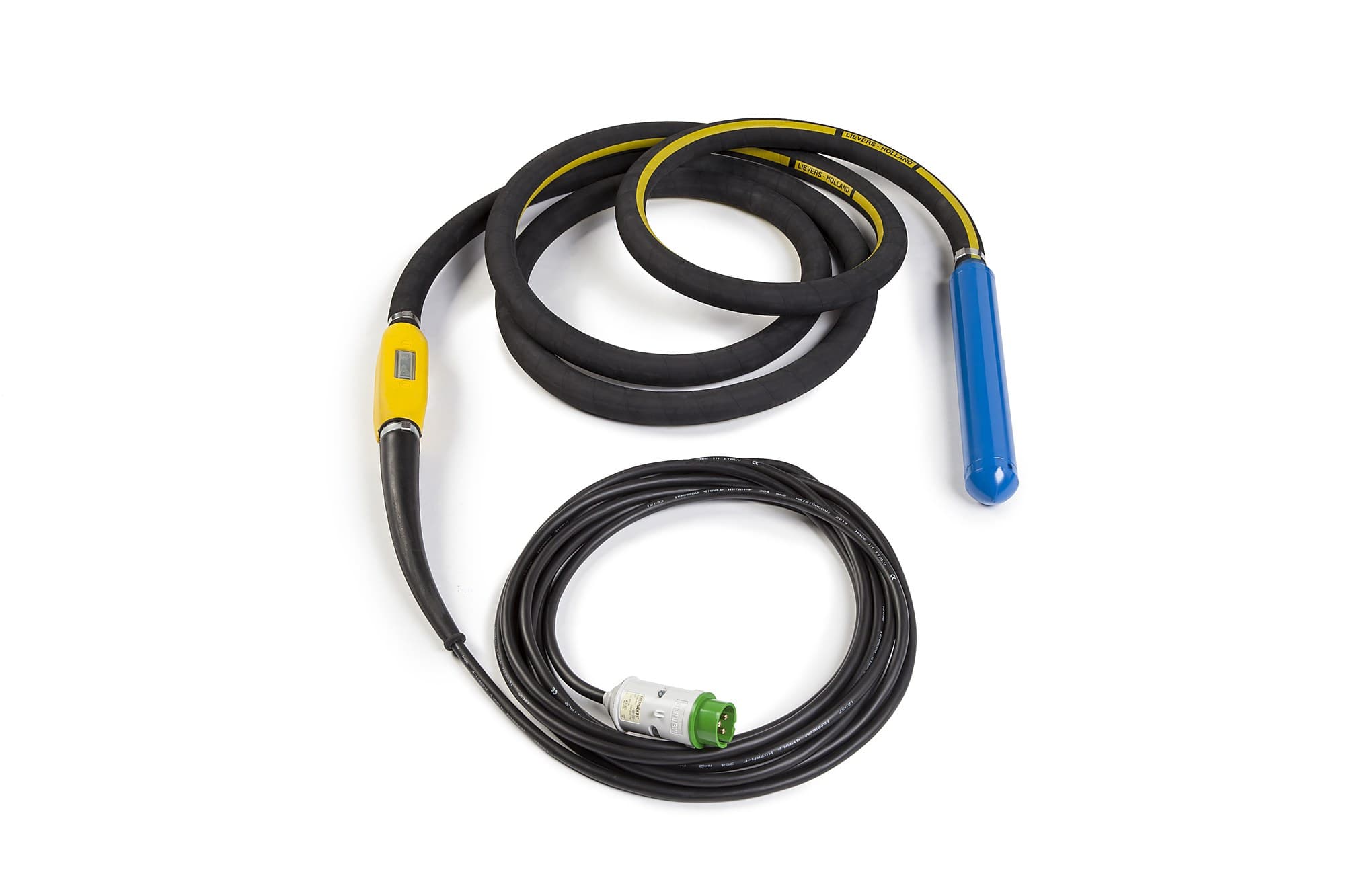
Not necessarily. Cordless battery models such as the Lievers P18Li run off an exchangeable 18 V lithium-ion battery, making them suited to sites without power. Electric high-frequency models run from mains — some through a separate frequency converter, others, like the Lievers LHF-E, via an integrated inverter that works straight off a standard single-phase socket with no external converter. Pneumatic pokers instead run on compressed air.
A concrete poker is the British-English name for a poker vibrator: an internal concrete vibrator whose vibrating steel head is immersed in fresh concrete to drive out trapped air. Concrete poker, vibrating poker and poker vibrator all describe the same tool.
Yes. Vibrating poker, concrete poker and poker vibrator are interchangeable names for the same internal vibrator — a vibrating head on a flexible shaft, driven by battery, mains electricity or compressed air. When comparing models, look at head diameter, vibration frequency and power source rather than the name.
 How-to
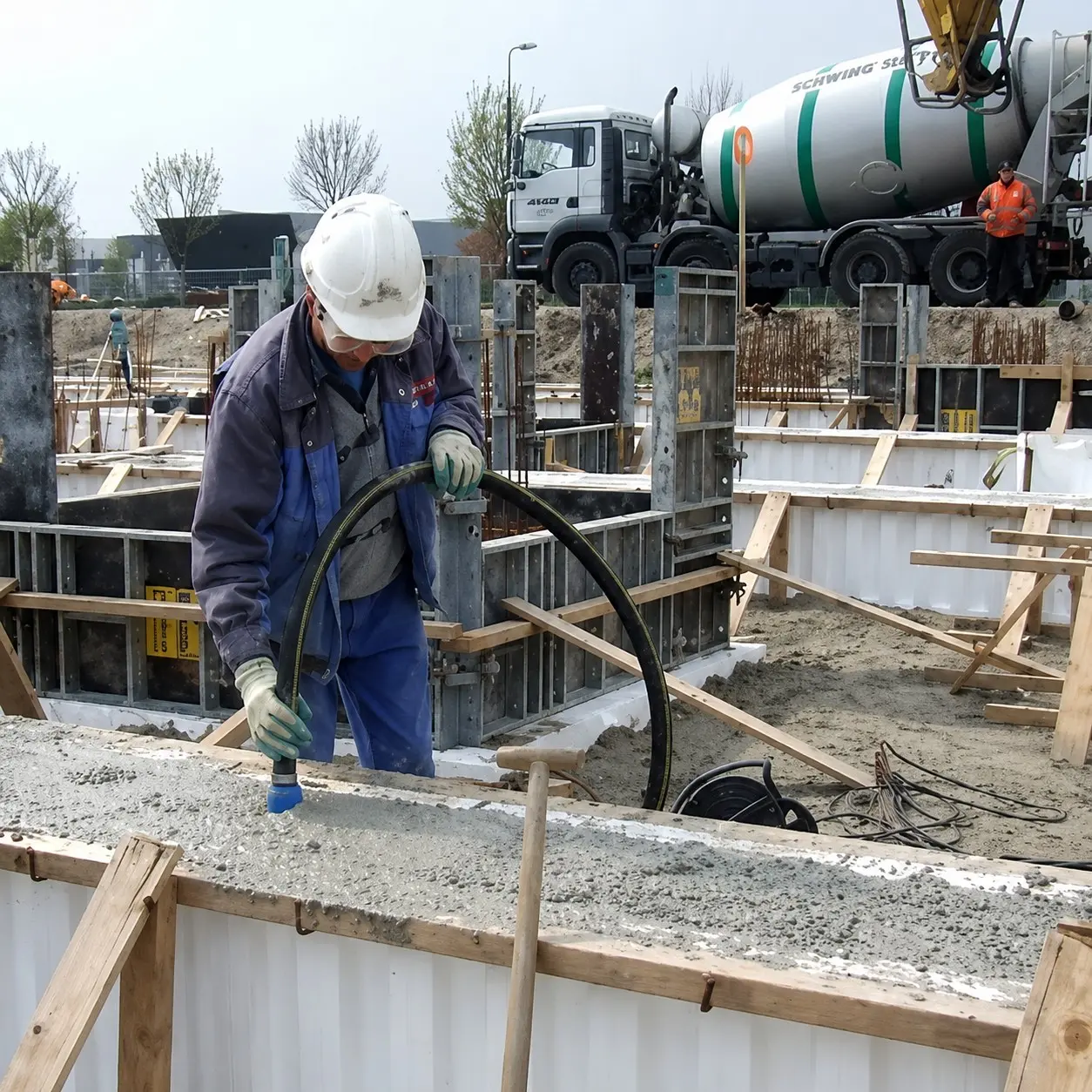
A step-by-step guide to compacting fresh concrete with an internal poker (immersion) vibrator — insertion technique, spacing, how long to vibrate, and how to avoid over-vibration.
Read articleExplainerWhat "high frequency" means for internal (poker) concrete vibrators, why a higher vibration frequency gives finer and faster compaction, the difference between a separate frequency converter and an integrated inverter, and how to choose the right setup.
Read article