Compaction
High-frequency vibration compacts concrete by shaking the immersed poker head at around 200 Hz — roughly 12,000 vibrations per minute — instead of the 50 Hz you get straight from the mains. That much faster cycle drives trapped air out more finely and more quickly, which is why high-frequency internal vibrators produce denser, stronger concrete and cope far better with congested reinforcement and high-quality mixes.
Every internal vibrator works the same way in principle: a steel poker head is immersed in fresh concrete, where it oscillates rapidly and shakes trapped air out of the mix so the paste flows densely around the reinforcement. What separates the tools is *how fast* that head vibrates — its frequency.
A basic vibrator driven straight from a standard electrical supply is limited by the mains frequency, which is 50 Hz in Europe (60 Hz in North America). A high-frequency internal vibrator instead runs an electric motor at a much higher speed, producing a vibration frequency of around 200 Hz at the head — about four times faster. In everyday terms that works out to roughly 12,000 vibrations per minute. Lievers, which has designed and built concrete compaction machinery in Mijdrecht, the Netherlands, since 1954, uses exactly this principle across its poker-vibrator range.
To reach 200 Hz you need to raise the frequency of the power feeding the motor. That is done either by a separate frequency converter placed between the mains and the vibrator, or by electronics built into the tool itself — more on that distinction below.
Frequency and amplitude do different jobs inside the concrete. Amplitude — how far the head physically moves — sets how far the vibration reaches into the mix. Frequency — how often it moves — governs how the individual particles respond.
At a low frequency the mix is worked in relatively coarse, slow pulses. Raising the frequency to around 200 Hz applies many more energy cycles per second, and those rapid cycles couple especially well to the smaller particles of sand and cement paste. The result is a more thorough de-airing of the fine fraction of the mix, so bubbles are driven out more completely and the concrete consolidates in less time per insertion. In practice a high-frequency head reaches full compaction faster, which speeds up the pour and reduces operator fatigue on long jobs.
That finer, faster action is also gentler on the mix when used correctly, because the operator spends less time at each insertion point to achieve the same density.
The advantage is clearest in demanding work. Densely reinforced sections — where rebar is closely spaced and access for the poker is tight — are exactly where trapped air tends to lodge and honeycombing forms. The rapid, fine cycles of a high-frequency vibrator work air out of these congested zones more reliably than a slow, coarse pulse.
The same is true for high-quality architectural or high-strength concrete, where a dense, uniform, void-free result is the whole point. Because high-frequency compaction de-airs the paste so thoroughly, it helps deliver the smooth surfaces and consistent strength these mixes are specified for. For thin sections and precast elements, a smaller high-frequency head can be worked into tight spaces while still delivering full consolidation.
There are two ways to get the higher-frequency power a high-frequency motor needs.
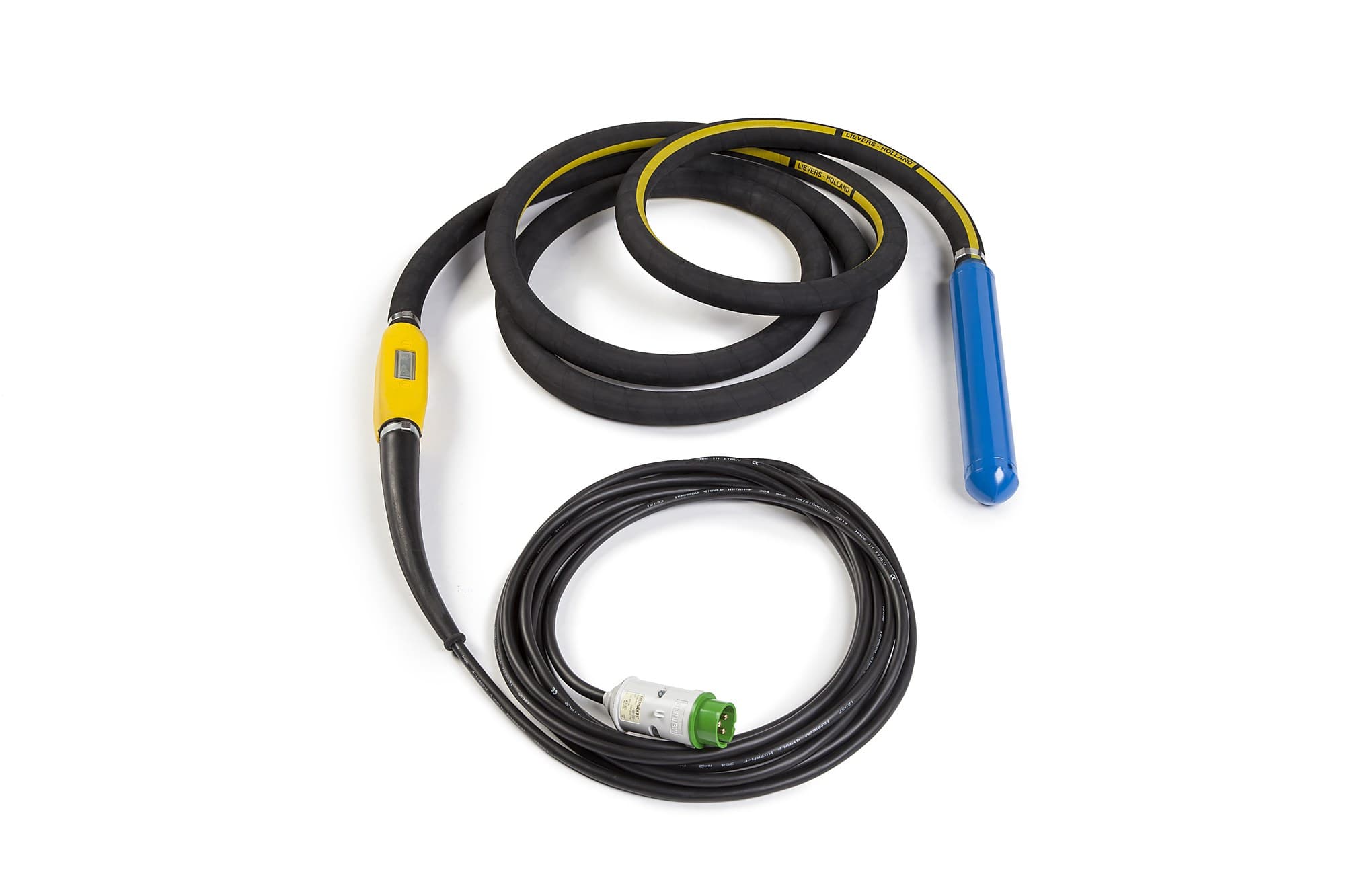
The traditional approach uses a separate frequency converter: a standalone unit that plugs into the mains and outputs a higher-frequency three-phase supply (typically around 200 Hz) to one or more vibrators. A single converter can often feed several pokers at once, which suits large pours where a crew runs multiple vibrators together. The trade-off is one more box to transport, position and cable up on site.
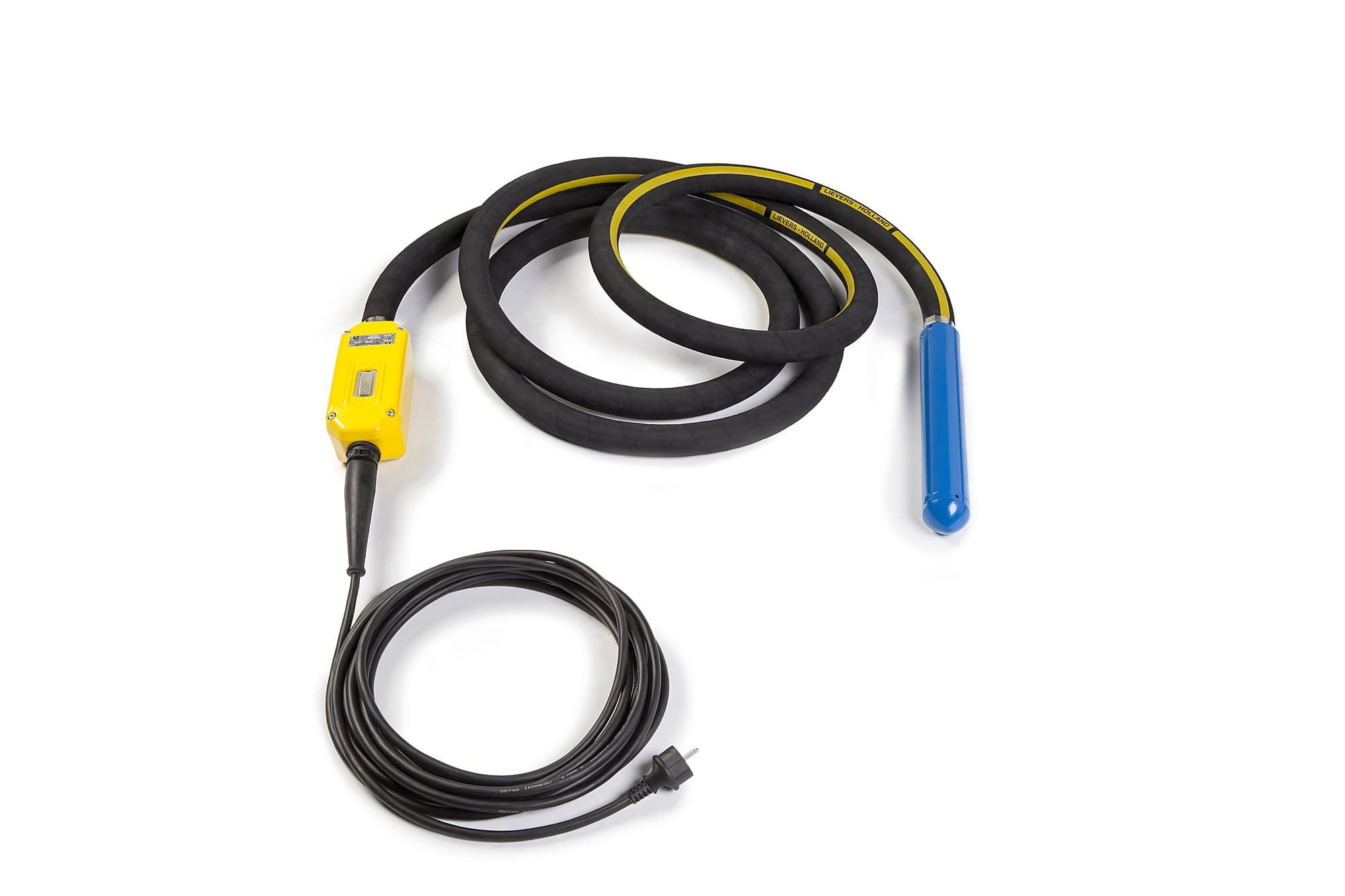
The modern alternative builds the electronics into the tool. A high-frequency poker with an integrated inverter — such as the Lievers LHF-E — carries its own converter inside the housing. It converts single-phase mains power into a 200 Hz three-phase output on board, driving the head at about 12,000 vibrations per minute, so it plugs straight into an ordinary single-phase socket with no separate converter required. That removes a piece of equipment from the site and simplifies setup for a single operator. The electronics are sealed against moisture and vibration to survive site conditions.
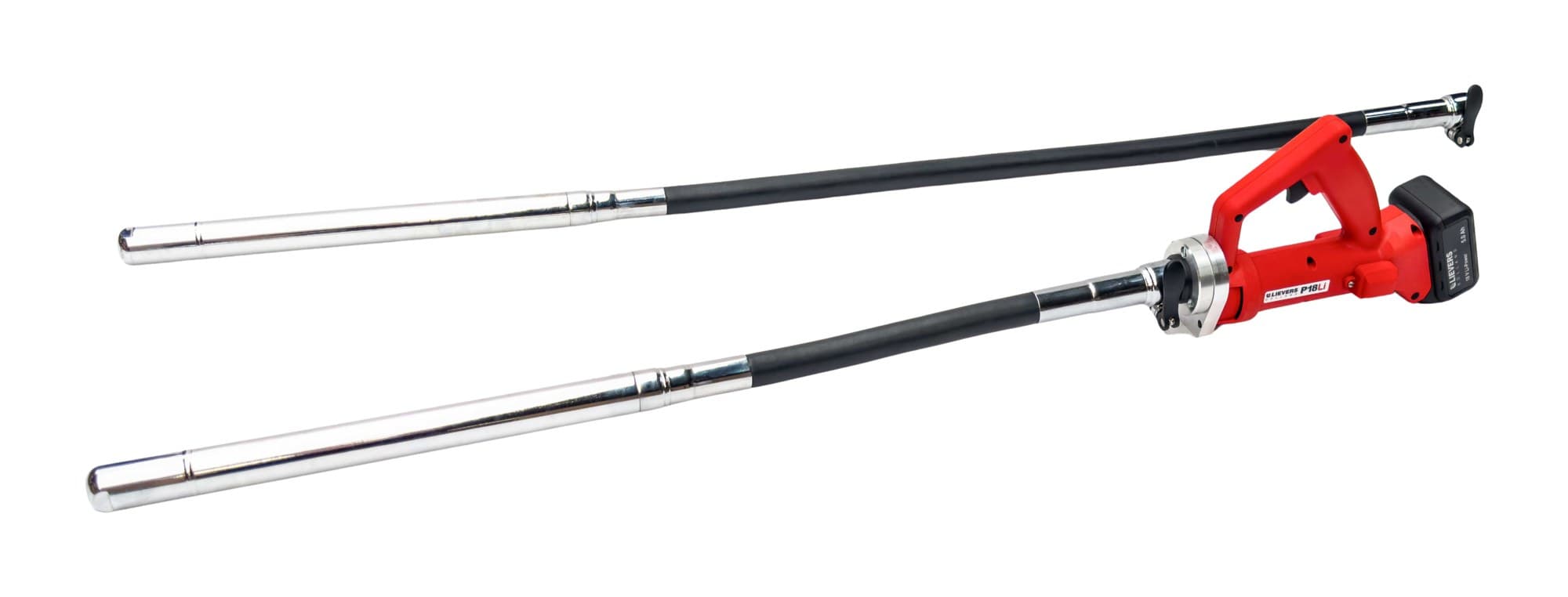
A third route drops the mains entirely: a cordless high-frequency poker like the Lievers P18Li generates the high-frequency vibration mechanically from an 18 V battery, giving the same ~12,000 vibrations per minute where there is no power at all.
Start with the work, then the power source:
For most reinforced and high-quality concrete, high-frequency internal vibration is the standard to aim for — and an integrated inverter is the easiest way to get it from a single socket.
Free advice
Our engineers in Mijdrecht think along about machine choice, concrete and planning — answer within one working day.
About the author
Lievers Holland has designed and manufactured concrete compaction and finishing machinery in Mijdrecht, the Netherlands, since 1954. Our guides are written by the same engineering team that builds the machines.
It is an internal (immersion) concrete vibrator whose steel poker head vibrates at a high frequency — around 200 Hz, or roughly 12,000 vibrations per minute — instead of the 50 Hz available straight from the mains. A high-frequency motor in the head is fed by higher-frequency power, either from a separate frequency converter or from an inverter built into the tool. The head is immersed in fresh concrete to drive out trapped air and consolidate the mix.
The difference is the vibration frequency. A normal vibrator running straight off the mains is limited to 50 Hz (60 Hz in North America), while a high-frequency vibrator runs at about 200 Hz — roughly four times faster, around 12,000 vibrations per minute. The higher frequency couples better to the fine sand and paste in the mix, so it de-airs concrete more finely and more quickly, especially in demanding pours.
Because it compacts finer and faster. The rapid cycles at around 200 Hz drive air out of the fine fraction of the mix more thoroughly, giving denser, stronger, more durable concrete with fewer voids and less honeycombing. It also reaches full compaction in less time per insertion, which speeds up the pour and reduces operator fatigue.
Not always. A high-frequency motor needs higher-frequency power, but that can come from a separate frequency converter or from an inverter integrated into the tool. A poker with an integrated inverter — such as the Lievers LHF-E — makes its own 200 Hz supply internally and plugs straight into a standard single-phase socket, so no separate converter is required. A standalone converter still makes sense when you want to run several pokers from one unit on a large pour.
Yes, generally. Densely reinforced sections trap air in the tight gaps between bars, and that is where honeycombing forms. The fine, rapid action of a high-frequency vibrator works air out of these congested zones more reliably than a slower, coarser pulse, so it is the preferred choice for heavily reinforced and high-quality concrete. Matching the head diameter to the available access matters too — a smaller head reaches into tight reinforcement.
Internal vibrators for structural concrete typically operate in the high-frequency range of around 150–250 Hz, with about 200 Hz (roughly 12,000 vibrations per minute) being common for poker vibrators. This is well above the 50 Hz of a plain mains-driven tool and is effective at de-airing the sand and cement paste. Always vibrate each insertion only until the air bubbles stop rising to avoid over-vibration and segregation.
 Explainer
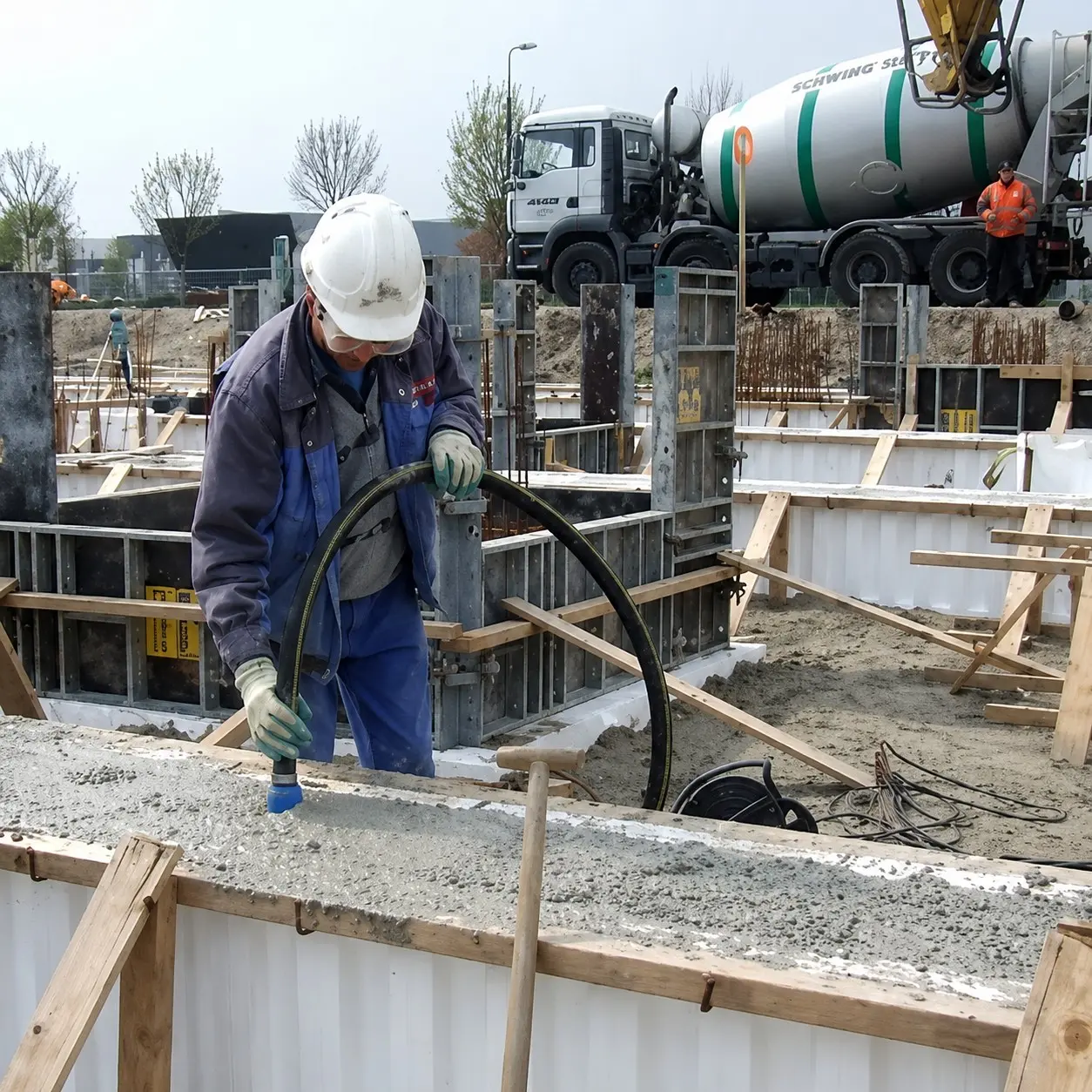
A plain-language explainer of poker (internal) concrete vibrators — what they are, how the vibrating head consolidates fresh concrete, the main power types, how head diameter is chosen, and when to use one instead of a surface method.
Read articleExplainerA plain-language explainer on whether your concrete vibrator needs a separate frequency converter: what a converter does, when it is required, when it is not, and how to size one to the poker vibrators it will drive.
Read article