Compaction
You need a frequency converter if your concrete vibrator is a high-frequency poker that runs on three-phase power at around 200 Hz and has no inverter of its own — the converter creates that higher-frequency supply from ordinary mains. You do not need one for a cordless battery poker, or for a high-frequency poker with a built-in (integrated) inverter, because those already generate their own operating frequency internally.
High-frequency internal (poker) vibrators do not run on ordinary mains electricity as it comes out of the socket. They are built around a small three-phase motor that spins fastest — and compacts concrete most effectively — when it is fed three-phase power at a much higher frequency than the 50 Hz or 60 Hz of the grid. A frequency converter is the device that bridges that gap. It takes a standard single-phase or three-phase mains supply and transforms it into a higher-frequency three-phase output, typically around 200 Hz, which drives the vibrator head at its rated speed of roughly 12,000 vibrations per minute.
Many converters do a second job at the same time: they lower the voltage to a safe, protective extra-low level and electrically isolate the output. That combination keeps the operator well away from mains voltage while the vibrator still receives the high-frequency power it needs. Lievers Holland has designed and built concrete compaction machinery in Mijdrecht, the Netherlands, since 1954, and supplies compact high-frequency converters for exactly this purpose.
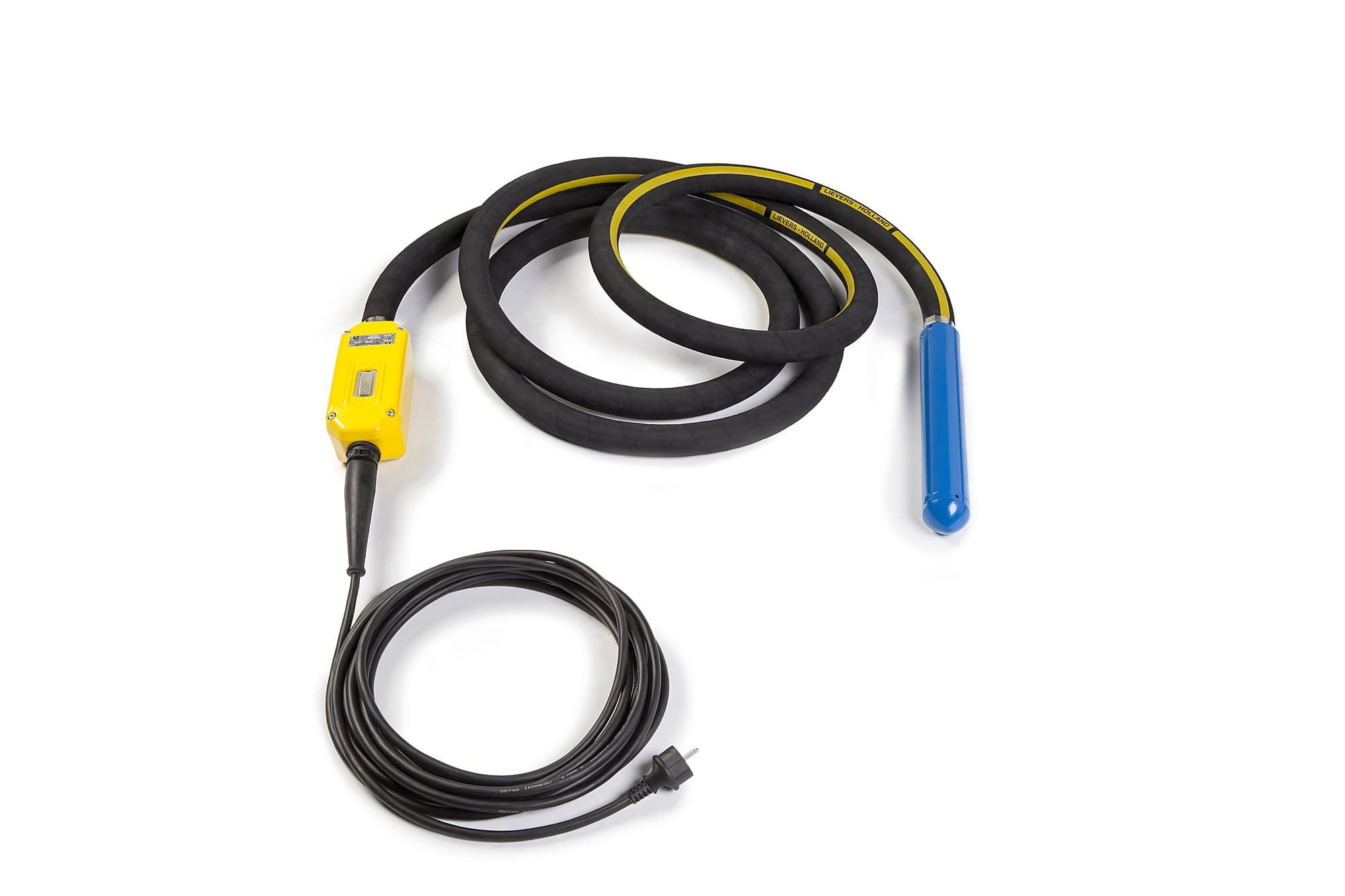
You need a frequency converter whenever the poker vibrator itself cannot generate its own operating frequency. That is the case for classic high-frequency pokers, which contain only a motor and a vibrating head and expect to be plugged into a 200 Hz, three-phase source. Connect one of these directly to a wall socket and it simply will not run correctly, because the mains frequency is far too low.
This is the traditional site setup: one converter positioned near the pour, feeding one or more high-frequency pokers through its output sockets. It is a proven, robust arrangement, and a single well-sized converter can keep several vibrators working at once — useful on larger pours where a crew runs multiple heads in parallel.
Two kinds of poker vibrator need no separate converter at all.
The first is the cordless battery poker. It carries its own power electronics and runs entirely from a rechargeable battery pack, so there is nothing external to convert — you charge it and go. That makes it a natural choice for repair jobs, remote sites and locations with no reliable power.
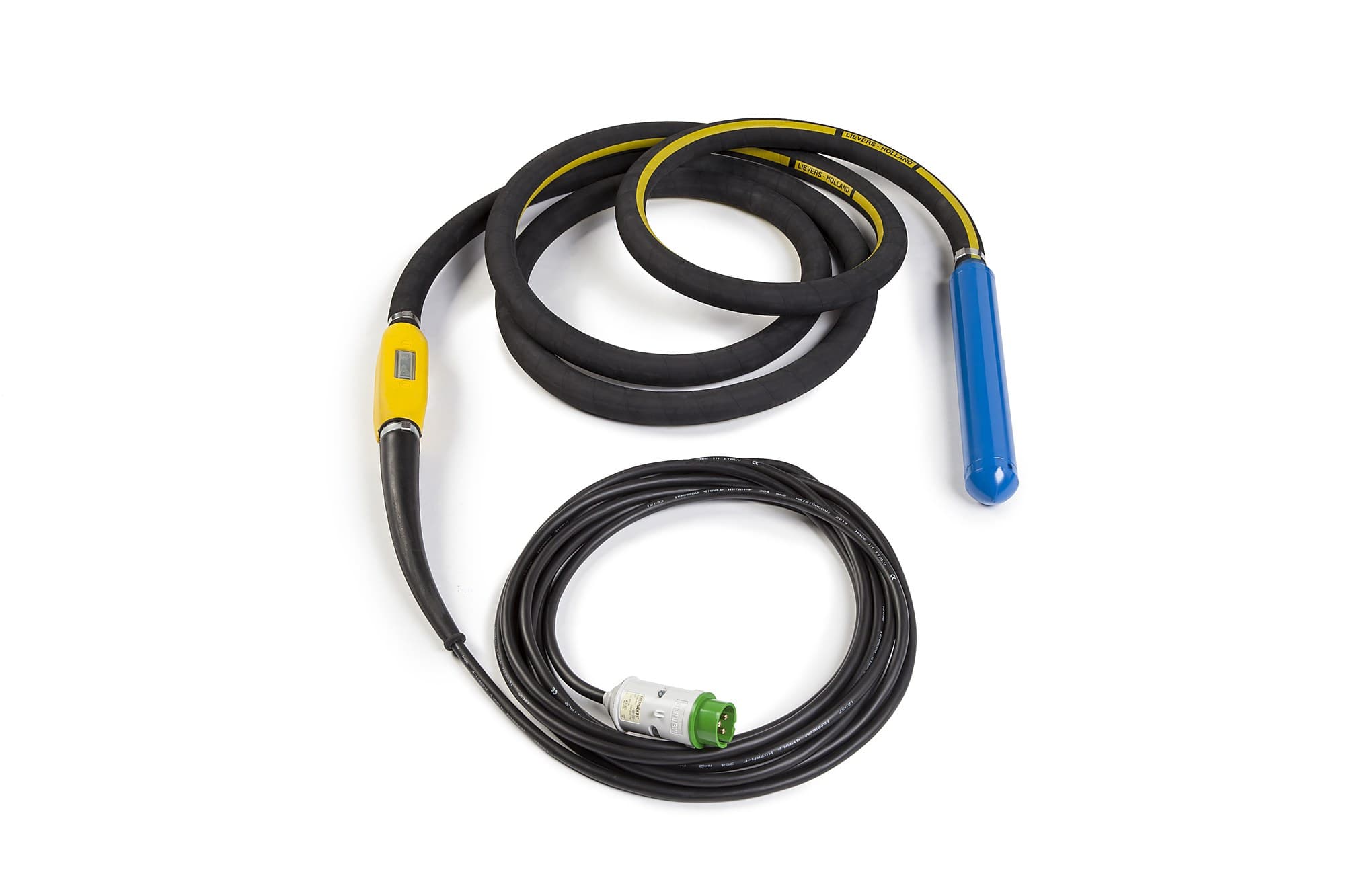
The second is the high-frequency poker with an integrated inverter. Here the frequency-conversion electronics are built into the tool itself. The unit accepts an ordinary single-phase supply and converts it internally to the three-phase, ~200 Hz output the motor needs. Lievers' LHF-E is an example of this approach: its integrated inverter lets it plug straight into a standard single-phase socket and compact concrete with no separate converter to carry, wire up or maintain. For a crew that wants the performance of high-frequency vibration without an extra box on site, this removes a step from the setup.
If you do use a separate converter, matching it to the vibrators is straightforward but important. Two figures govern the choice.
The first is electrical capacity. Every converter has a rated output — expressed in kVA and in output amps — and the combined current draw of all the pokers plugged into it must stay at or below that rating. Overloading a converter trips its protective shutdown, so it is worth leaving some headroom rather than running right at the limit.
The second is the number of pokers. Converters come with a set number of output sockets, commonly two to four, and each socket feeds one vibrator. So decide up front how many heads you want to run at once: a single-socket unit suits one operator, while a larger multi-socket converter lets a crew compact a big pour in parallel from one supply.
Also confirm that the converter's input matches the power you actually have on site — some units run from a single-phase 230 V socket, others expect a three-phase 400 V feed — and that its output voltage and frequency match what your pokers are rated for. Check the rating plate on both the converter and the vibrators before the first pour; if the numbers line up on capacity, socket count and supply, the pairing will run reliably all day.
High-frequency poker without its own inverter: yes, you need a converter. Battery poker or integrated-inverter poker: no, you don't. Choose whichever route keeps your particular site simplest — a shared converter feeding several heads, or self-contained pokers that plug straight into the wall.
Free advice
Our engineers in Mijdrecht think along about machine choice, concrete and planning — answer within one working day.
About the author
Lievers Holland has designed and manufactured concrete compaction and finishing machinery in Mijdrecht, the Netherlands, since 1954. Our guides are written by the same engineering team that builds the machines.
It depends on the vibrator. A high-frequency poker that runs on three-phase power at about 200 Hz and has no inverter of its own needs a frequency converter to work. A cordless battery poker or a poker with a built-in integrated inverter does not, because it already produces its own operating frequency.
It transforms an ordinary single-phase or three-phase mains supply into a higher-frequency three-phase output — typically around 200 Hz — that drives a high-frequency internal vibrator at its rated speed of roughly 12,000 vibrations per minute. Many converters also lower the voltage to a safe, isolated level so the operator is protected from mains voltage.
Only if that poker has an integrated inverter built into it, in which case it converts the frequency internally and runs straight from a standard socket. A conventional high-frequency poker with no built-in inverter cannot run correctly on plain mains power and must be fed by a separate frequency converter.
An integrated inverter is frequency-conversion electronics built directly into the poker vibrator. It accepts an ordinary single-phase mains supply and converts it internally into the three-phase, roughly 200 Hz power the motor needs, so no separate external converter is required. Lievers' LHF-E poker uses this design.
That is set by the converter's output sockets and its electrical capacity. Many units have two to four sockets, and each socket drives one poker — but the combined current draw of all connected vibrators must stay within the converter's rated output, or its overload protection will trip. For big pours, choose a larger multi-socket converter with enough capacity.
Match three things: capacity (the converter's rated kVA and amps must cover the combined draw of every poker plugged in), socket count (one per vibrator you want to run at once), and supply compatibility (its input must match the mains you have on site, and its output voltage and frequency must match the pokers). Check the rating plates on both before the first pour.
 Explainer
What "high frequency" means for internal (poker) concrete vibrators, why a higher vibration frequency gives finer and faster compaction, the difference between a separate frequency converter and an integrated inverter, and how to choose the right setup.
Read articleGuideA practical buyer's guide to selecting a poker (immersion) vibrator: the factors that decide head size, a diameter and action-zone guide, and how to choose between battery, electric high-frequency and pneumatic power.
Read article