Compaction
Choose a poker vibrator by matching the head diameter to the element and the power source to the site. A small head of around 28 mm suits thin, heavily reinforced or precast sections, while 38–45 mm and larger heads compact more concrete per insertion for mass pours and foundations; then pick cordless battery power for sites without mains, or an electric high-frequency poker for continuous work off a socket.
There is no single "best" poker vibrator — the right one depends on what you're pouring and where. Before comparing models, work through five factors:
Lievers has designed and built concrete compaction machinery in Mijdrecht, the Netherlands, since 1954, and the guidance below reflects how we help buyers match a tool to the job.
Head diameter is the single most important choice, because it sets both how much concrete each insertion consolidates and how well the head fits the element.
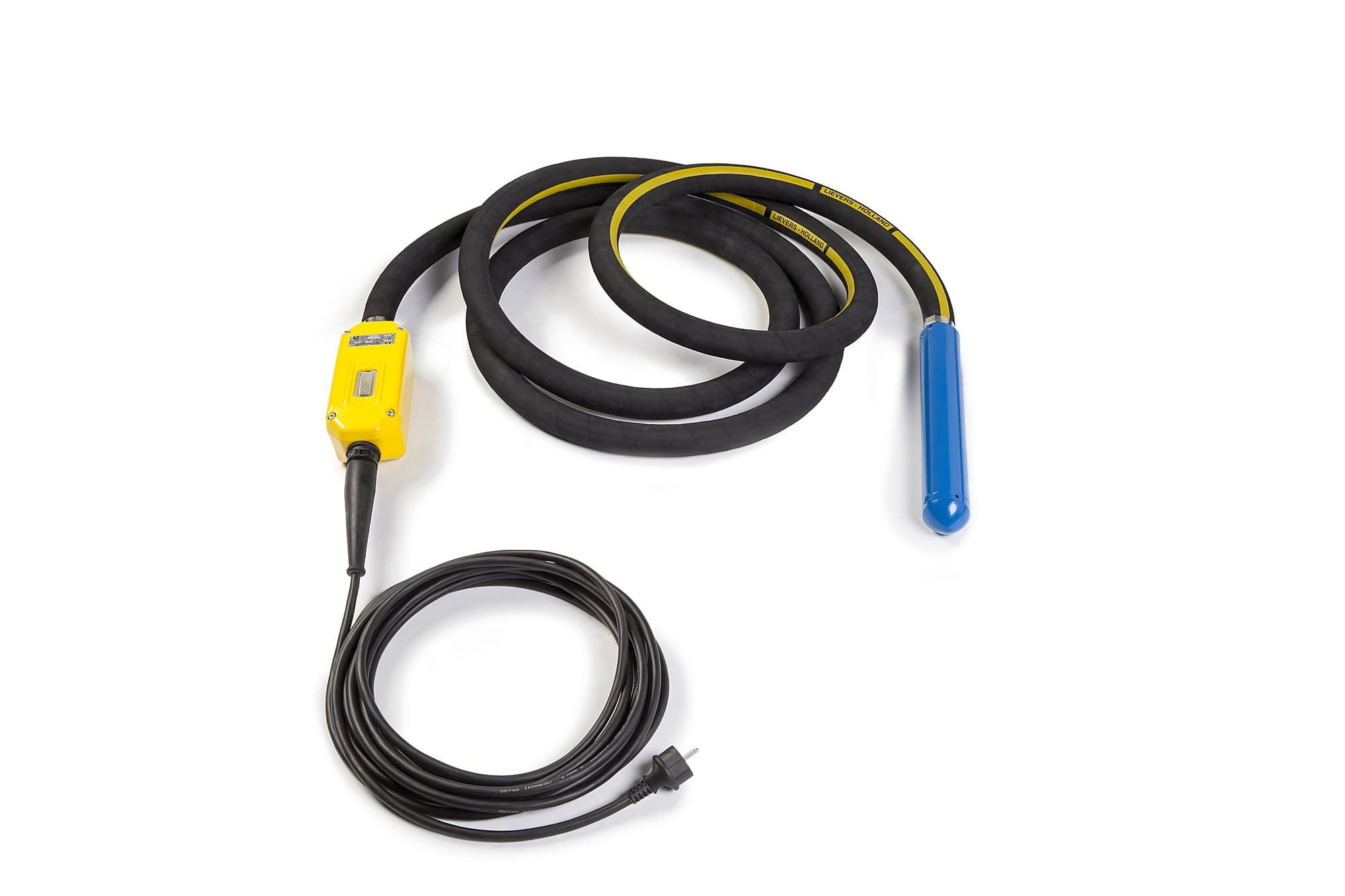
Action zone and spacing. As a rule of thumb, a single insertion consolidates a roughly circular zone from about 45 cm across for a small head up to around 85 cm for a large one. Lievers' electric LHF-E range spans this spread, with published compaction diameters from about 45 cm on the smallest model to 85 cm on the largest. Space your insertion points so those zones overlap — commonly around 50 cm apart for typical site pokers — so no concrete is left uncompacted between them. Larger heads can be spaced a little wider, smaller heads a little closer.
Once the head diameter is settled, match the drive to your site:
Whichever you pick, weigh operator exposure. Higher-vibration heads shorten permissible daily run time, so for long pours either rotate operators or select a lower-vibration configuration, and use anti-vibration gloves.
Free advice
Our engineers in Mijdrecht think along about machine choice, concrete and planning — answer within one working day.
About the author
Lievers Holland has designed and manufactured concrete compaction and finishing machinery in Mijdrecht, the Netherlands, since 1954. Our guides are written by the same engineering team that builds the machines.
Match the head diameter to the element. Around 28 mm suits thin, heavily reinforced or precast sections where access is tight; 38–45 mm covers general walls, slabs and most foundations; and 45 mm or larger is best for mass pours and large footings. Bigger heads consolidate more concrete per insertion but weigh more and transmit more vibration, so also weigh run time and operator comfort.
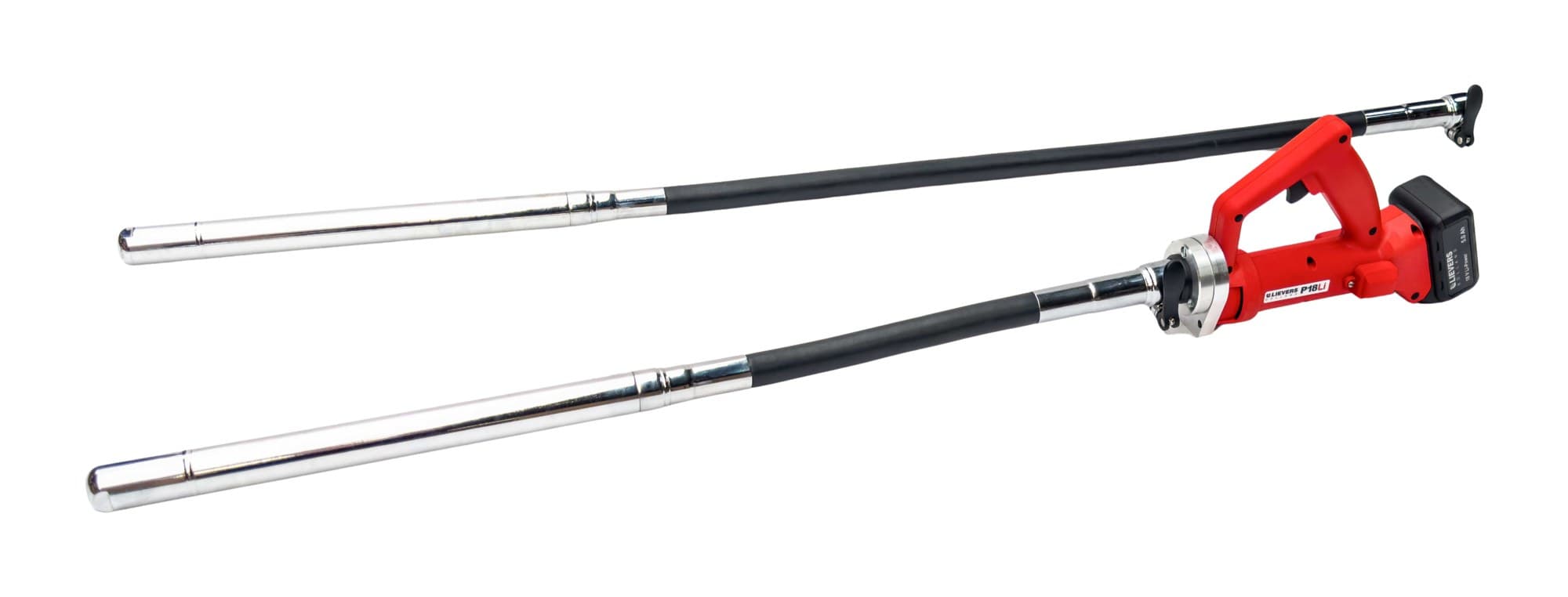
Start with the tightest space the head must fit — narrow forms and dense rebar set an upper limit on diameter, because a head that jams stalls the motor. Then consider pour volume: within what fits, a larger head speeds up bigger pours by consolidating a wider zone per plunge. A tool with interchangeable heads, like the P18Li with its 28, 38 and 45 mm options, lets one drive unit cover a range of jobs.
For heavily reinforced concrete and thin walls, choose a slim head of around 28 mm that slips between the bars and reaches the full depth without getting stuck. For foundations and mass pours, a larger 45 mm or bigger head consolidates more concrete per insertion and keeps a fast pour moving. Everyday walls and slabs sit comfortably in the 38–45 mm range.
It depends on your site. A cordless battery poker such as the P18Li works anywhere without mains power and is light and quick to deploy, making it ideal for small, scattered or remote pours; its limit is run time between charges. An electric high-frequency poker delivers consistent power for continuous, high-volume work — and integrated-inverter models like the LHF-E run straight from a single-phase socket with no separate frequency converter.
A single insertion consolidates a roughly circular zone that ranges from about 45 cm across for a small head up to around 85 cm for a large one. Because of that, insertion points are usually spaced around 50 cm apart so the vibrated zones overlap and no concrete is left uncompacted between them — larger heads can be spaced a little wider, smaller heads a little closer.
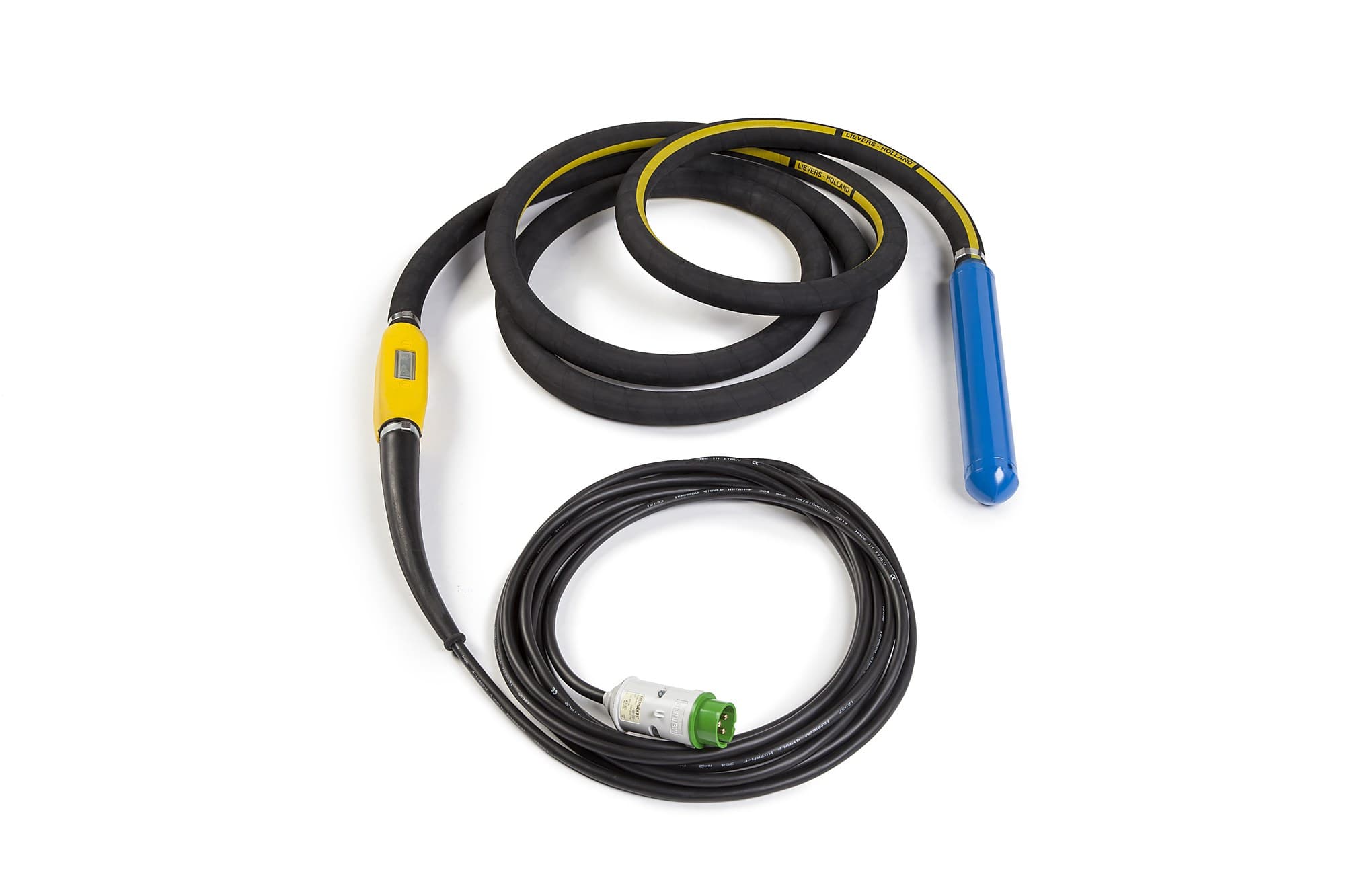
Not always. Traditional high-frequency pokers need a separate frequency converter to supply the motor. Integrated-inverter models, such as the Lievers LHF-E, build the inverter into the tool so they run directly from a standard single-phase mains socket — fewer boxes on site and a simpler setup. If you already run older converter-fed heads, a standalone converter still makes sense.
 Explainer
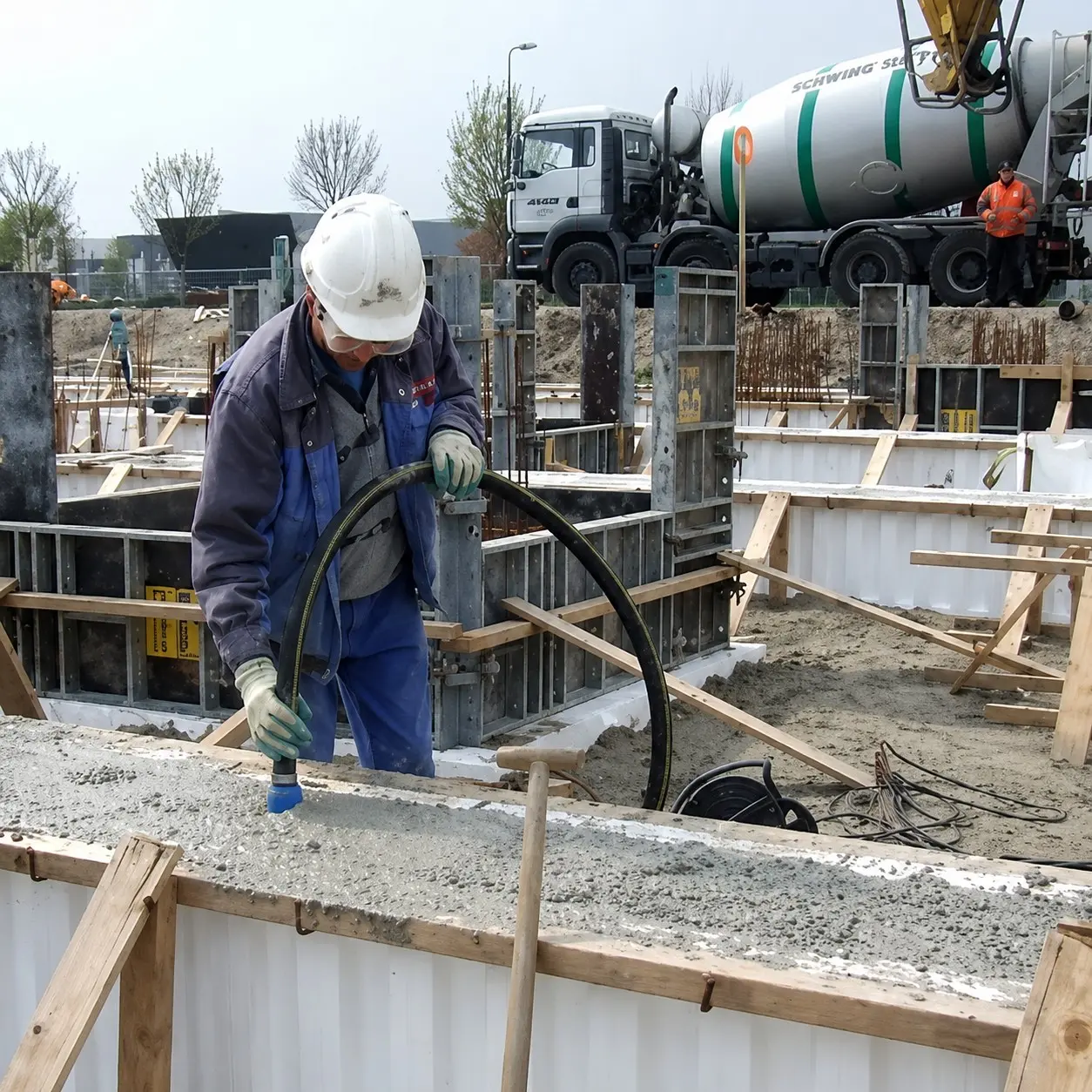
A plain-language explainer of poker (internal) concrete vibrators — what they are, how the vibrating head consolidates fresh concrete, the main power types, how head diameter is chosen, and when to use one instead of a surface method.
Read articleExplainerA plain-language explainer on whether your concrete vibrator needs a separate frequency converter: what a converter does, when it is required, when it is not, and how to size one to the poker vibrators it will drive.
Read article