Sustainability
Battery-powered concrete equipment now matches petrol for most everyday compaction and finishing work, while adding fume-free, spark-free, quiet operation that petrol can't offer indoors or in emission-free zones. Petrol and mains machines still win for very long, continuous pours where uninterrupted runtime matters more than emissions. The practical answer for most crews is a mix: battery for interiors, refurbishment and no-power sites, and petrol or mains where the pour simply never stops.
For decades a petrol engine was the default way to power a poker vibrator, a screed or a power trowel on site. That is changing fast, and it is being driven by the jobsite rather than by fashion.
The biggest push is emission-free construction. Across the Netherlands and much of Europe, more tenders now demand 'emissieloos bouwen' — zero-emission building — especially near nature areas, in city centres and on public infrastructure. A combustion engine simply cannot bid for that work. On top of that come three long-standing problems that battery power solves outright: the danger of carbon monoxide and exhaust fumes when working concrete indoors or in tunnels, tightening noise limits in built-up areas, and growing attention to operator health — fumes, vibration and noise exposure over a full working day.
At Lievers we design and build concrete compaction and finishing machinery in Mijdrecht, the Netherlands, and have done since 1954 — including a full battery-powered, zero-emission range alongside our petrol, mains and pneumatic machines. That means we have no reason to talk you into battery where petrol is genuinely the better tool. This guide is meant to help you choose honestly.
Cordless concrete tools have caught up because the motors and lithium-ion packs got good enough. The advantages are real and stack up quickly:
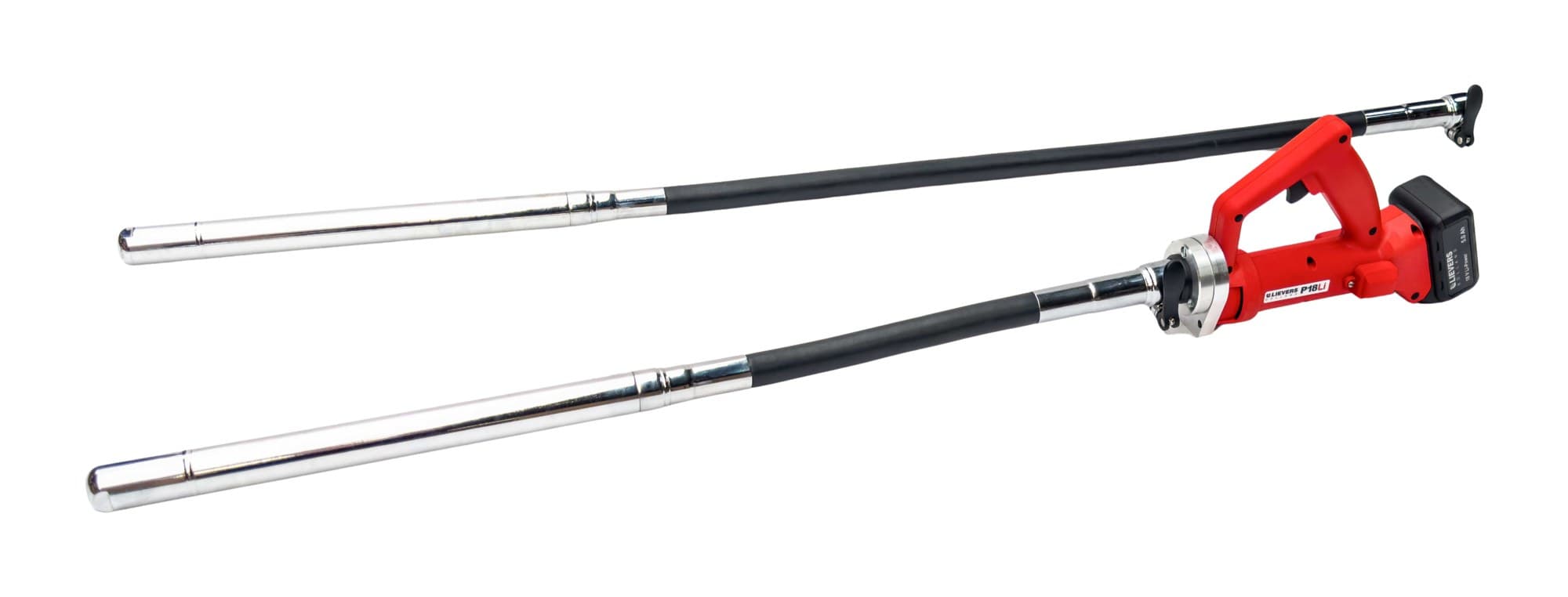
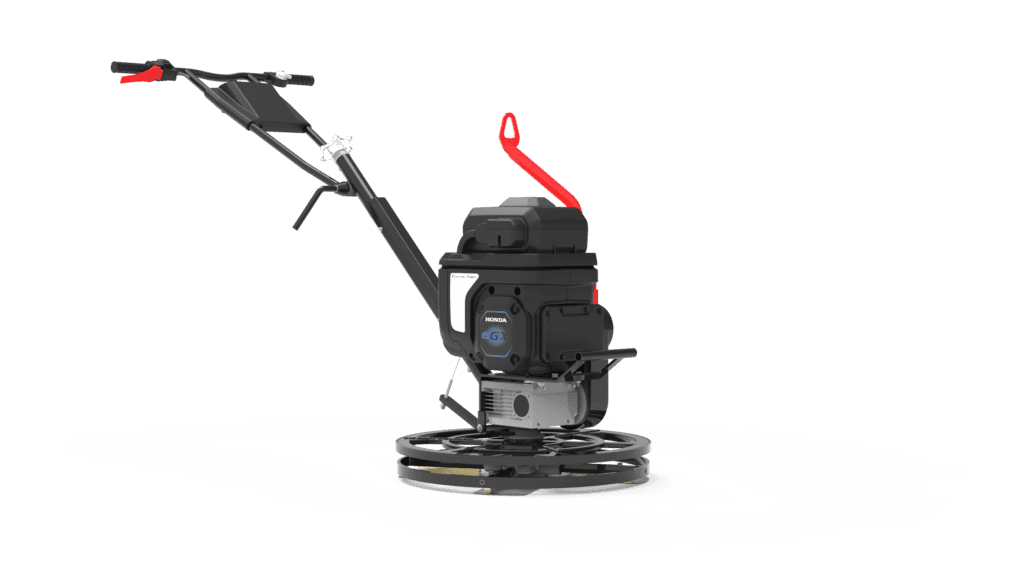
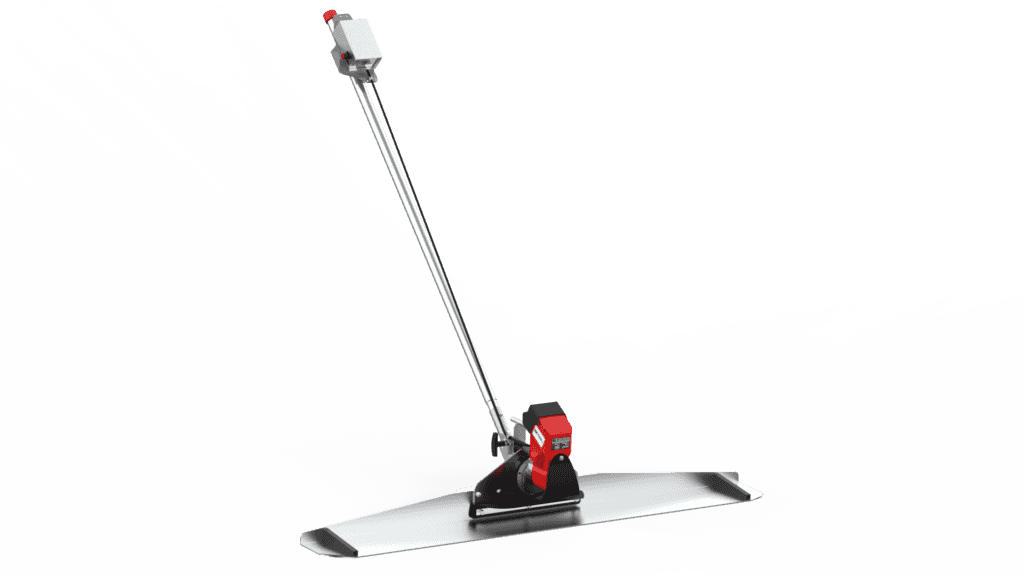
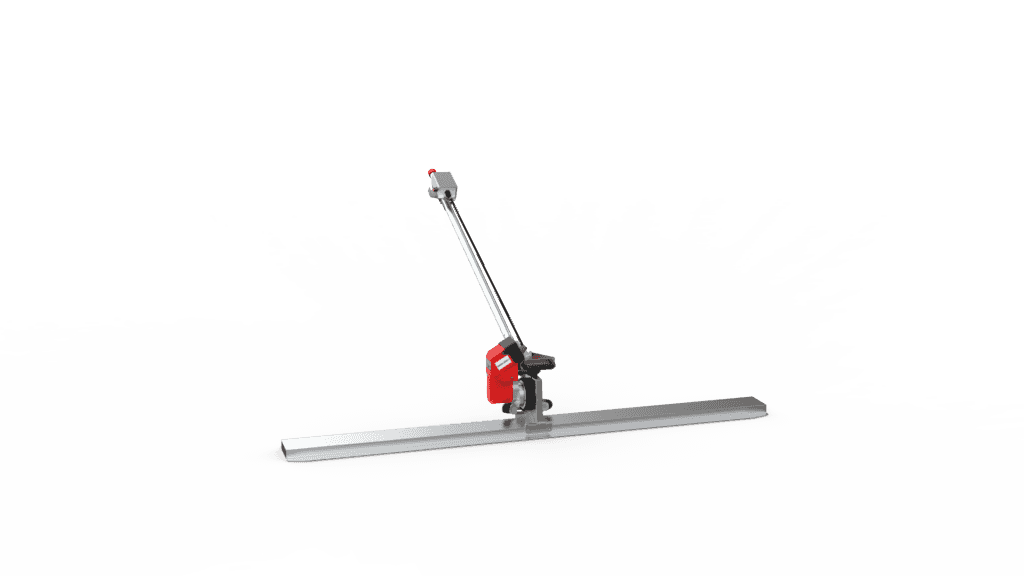
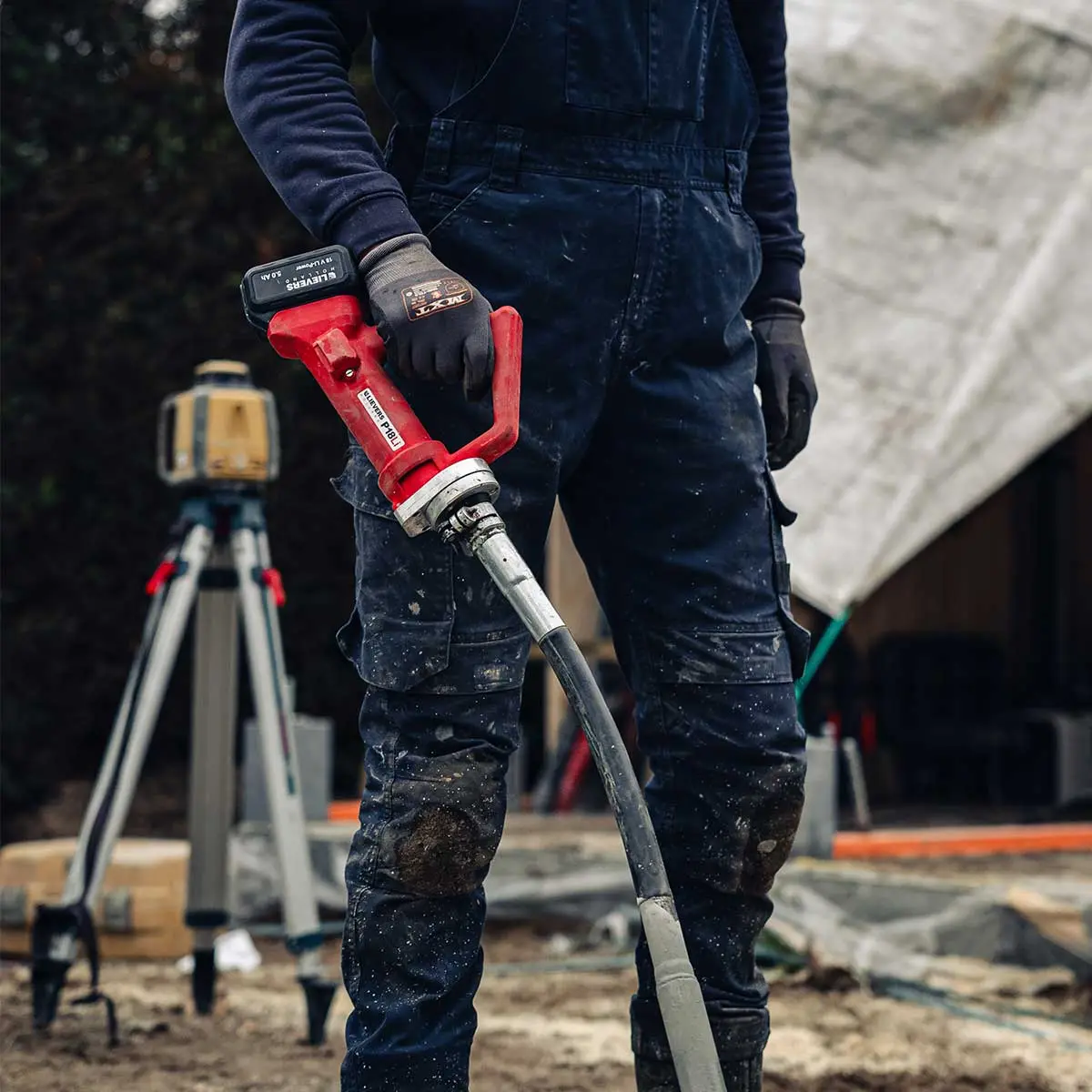
A good example is our P18Li cordless poker vibrator. It runs the same high-frequency action as a mains poker — around 12,000 vibrations per minute — from an exchangeable 18V 5Ah battery, weighs about 2.35 kg with the pack, and its permanently-lubricated drive shaft needs no oiling. On the finishing side, the LTM eGX battery power trowel and the K150Li and HAL200Li battery vibrating screeds bring the same fume-free, cordless freedom to floor levelling and slab finishing.
Battery is not the answer to everything, and it is worth being straight about that.
The honest limit of battery is sustained runtime. A single charge is measured in tens of minutes of active use, not hours — the P18Li delivers roughly 45 minutes of compaction per 5 Ah charge. For a very large, continuous pour that must not stop, a petrol machine that you simply refuel, or a mains machine on a reliable supply, keeps going without interruption. Heavy, all-day production floors and big civil pours are where combustion or mains power still earns its place.
That is a runtime question, not a power question — and it is one you can plan around, which we cover below.
Battery versus petrol is not the only choice. Where there is a stable power supply, mains-electric and high-frequency machines are often the best of both worlds: no fumes and no spark like battery, but unlimited runtime like petrol. A high-frequency poker with an integrated inverter runs straight off a single-phase socket, so you get emission-free operation with no charging breaks.
There is also a pneumatic route for special cases. Our air-driven LAP-45 power float runs off a compressor rather than a petrol engine — no exhaust, no spark — which makes it suitable for explosion- or fire-risk areas and damp, hot or saline conditions a combustion engine would struggle with. Air power needs a compressor on site, but where you already have one it is a clean, robust option.
Match the power source to the job rather than picking one for everything:
The runtime gap is real but manageable. Because the batteries are exchangeable, the practical approach on a longer pour is simple: run two or three packs in rotation and keep the next one on the charger. With the P18Li, a pack charges in roughly 70 minutes — comfortably longer than it takes to drain — so with two spares one operator can effectively work without stopping while the empties top up. The LED charge indicator tells you when a pack is nearly done, and it is worth always starting a fresh pour on a full charge: a battery that is running low turns the spindle more slowly and weakens the vibration at the poker tip.
So the choice is rarely 'battery or nothing'. For most crews it is a small fleet — cordless tools for the interiors, refurbishments, no-power sites and zero-emission zones that make up more and more of the work, kept alongside petrol or mains machines for the occasional pour that genuinely never stops.
Free advice
Our engineers in Mijdrecht think along about machine choice, concrete and planning — answer within one working day.
About the author
Lievers Holland has designed and manufactured concrete compaction and finishing machinery in Mijdrecht, the Netherlands, since 1954. Our guides are written by the same engineering team that builds the machines.
For compaction and finishing, yes — modern cordless tools deliver the same working action as their corded equivalents. Our P18Li battery poker, for example, runs at about 12,000 vibrations per minute, the same high-frequency compaction as a mains poker. The real difference between battery and petrol is not power but runtime: a battery works in bursts and is recharged, while petrol runs continuously as long as you refuel.
Expect tens of minutes of active use per charge rather than a full shift. The P18Li cordless poker vibrator delivers roughly 45 minutes of compaction from a single 5 Ah charge. Because the packs are exchangeable, most crews carry two or three and rotate them on the charger — a P18Li pack recharges in about 70 minutes, so with a couple of spares you can keep working through a longer pour.
Yes, and this is one of the main reasons to choose them. Battery tools produce no exhaust and no carbon monoxide, so they are safe in basements, stairwells, tunnels and enclosed refurbishments where running a petrol engine would be dangerous. They are also much quieter, which helps with indoor and night-work noise limits. A petrol machine should never be run in an unventilated interior.
Choose a battery poker like the P18Li for indoor work, refurbishment, tunnels, sites without mains power and any zero-emission zone — it is fume-free, spark-free, cordless and quiet, with the same ~12,000 vpm action as a mains poker. Choose petrol (or a high-frequency mains poker) for very long continuous pours where uninterrupted runtime matters most. Many crews keep both and pick per job.
Petrol still makes sense for very large, continuous pours and heavy all-day production where the machine must run for hours without stopping and refuelling is quicker than swapping batteries. If the site has no emission or noise restrictions and no enclosed spaces, petrol's uninterrupted runtime is an advantage. Where there is a stable power supply, though, a mains-electric or high-frequency machine often beats both — unlimited runtime with no fumes or spark.
Battery tools are cordless and fume-free but limited by charge time. Mains-electric and high-frequency machines are fume-free with unlimited runtime, but need a power supply and a cable. Pneumatic (air-driven) tools such as the LAP-45 power float run off a compressor with no exhaust or spark, which suits explosion-risk or damp, hot and saline environments — but they need a compressor on site. All three avoid the exhaust emissions of a petrol engine.
 Explainer
A plain-language guide to zero-emission and emission-free construction zones: what they are, why they are spreading, which equipment qualifies, and how a concrete crew can prepare with battery-electric machines.
Read articleHow-toA step-by-step guide to pouring and finishing concrete in enclosed and indoor spaces without engine fumes — why petrol and diesel tools are dangerous inside, and how battery-electric and air-driven equipment let you compact, level and finish a slab emission-free.
Read article