Leveling & screeding
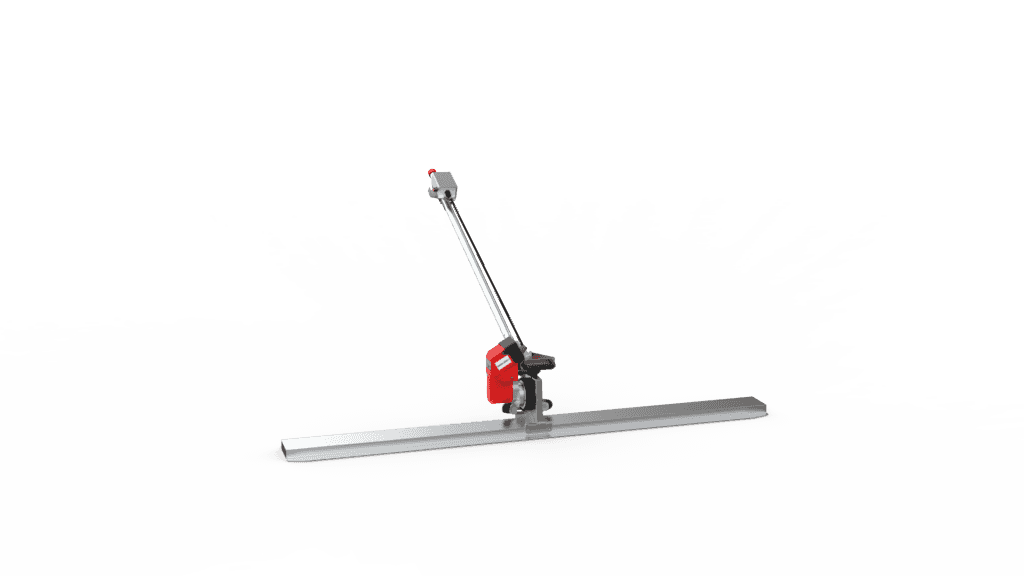
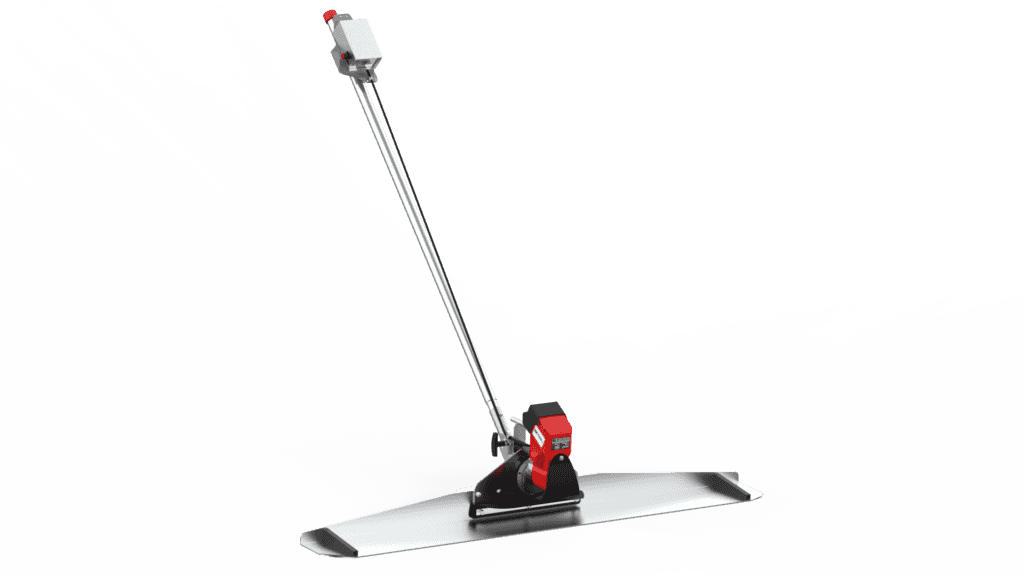
A vibrating screed is a straight vibrating blade or beam that is drawn across freshly placed concrete to compact and level the top of the slab in one pass. The vibration brings cement paste to the surface and settles the mix, while the moving edge strikes off the concrete to a flat, even level. It works the surface of the pour, whereas a poker vibrator compacts the concrete in depth.
A vibrating screed is a straight-edged tool — a blade or beam — that vibrates as it is pulled across the top of freshly placed concrete. It does two jobs at once: it compacts the top layer of the slab and it levels, or "strikes off", the surface to the correct height. The vibration liquefies the surface just enough that the mix settles and the cement paste rises, while the rigid edge shears away high spots and fills low ones, leaving a flat, closed surface ready for further finishing. Screeds are the standard tool for the levelling-and-screeding stage of a floor, slab or pavement pour, and they are also known in some markets by their local names — for example *listwa wibracyjna* in Polish.
Several tools fall under the heading of "vibrating screed", and the terminology varies by region and by the width of the pour.
All of these share the same principle: a vibrating, straight edge that compacts and levels the surface. They differ mainly in width, weight and how they are supported and moved.
A vibrating screed relies on surface vibration. An electrically or mechanically driven vibration system shakes the blade at speed, and that energy passes into the top of the slab. The vibration briefly reduces the friction between the aggregate particles, so the mix consolidates under its own weight and the finer cement paste is drawn up to form a smooth film at the surface. As the operator pulls the vibrating edge across the pour, that edge acts as a moving straightedge: it screeds off the concrete to the level set by the formwork or guide points. Lightweight designs help here — a lighter blade floats on the paste rather than digging in, and adjusting the blade's angle to the surface controls how it glides. The result is a compacted, level, ridge-free surface in a single working pass.
A vibrating screed and a poker (internal) vibrator are complementary tools, not alternatives. The key difference is where the vibration acts.
In the pour sequence for a floor or slab, the two are used in order: first the poker consolidates the concrete in depth so no voids or honeycombing are left inside, and then the screed compacts and levels the top. Skipping the poker on a thicker structural pour and relying on the screed alone can leave the concrete under-compacted below the surface, because surface vibration does not reach deep into the slab.
Vibrating screeds are used wherever fresh concrete needs a flat, compacted top surface: ground-bearing and suspended floors, foundation slabs, industrial and warehouse floors, driveways, pavements and roads, and precast elements. Handheld finishing screeds like the HAL200Li suit the great majority of floor and slab work, where one operator needs a flat surface quickly and without setting rails; wider vibrating beams and truss screeds take over on large-area or paving jobs. Lievers Holland has designed and built concrete compaction and finishing machinery in Mijdrecht, the Netherlands, since 1954, and vibrating screeds sit alongside pokers as the two core tools of the compaction-and-finishing stage.
Free advice
Our engineers in Mijdrecht think along about machine choice, concrete and planning — answer within one working day.
About the author
Lievers Holland has designed and manufactured concrete compaction and finishing machinery in Mijdrecht, the Netherlands, since 1954. Our guides are written by the same engineering team that builds the machines.
A vibrating screed is a straight vibrating blade or beam that is pulled across freshly placed concrete to compact and level the top of the slab. The vibration settles the mix and brings cement paste to the surface, while the moving edge strikes the concrete off to a flat, even level. It is the standard tool for the levelling and finishing stage of a floor, slab or pavement pour.
They are the same idea at different scales. A handheld wet or finishing screed (also called a bullfloat) is a light blade, usually about 1.5 m wide, guided by one operator on floors and slabs. A vibrating beam is a longer, rigid straightedge that spans a wider strip and is drawn across bigger pours. A truss screed uses a long aluminium truss to cross very wide bays such as industrial floors, bridge decks and highways in one pass.
It is used to compact and level the top surface of fresh concrete. Typical applications include ground-bearing and suspended floors, foundation and industrial slabs, driveways, pavements, roads and precast elements. Handheld finishing screeds cover most floor and slab work, while wider beams and truss screeds are used for large-area and paving jobs.
A vibrating screed works the surface of the slab — it compacts the top layer and levels it to the finished height. A poker vibrator is immersed into the pour and compacts the concrete in depth, driving trapped air out from within walls, columns, foundations and slabs. Surface vibration from a screed does not reach deep into the mix, which is why the two tools do different jobs.
For most structural pours, yes. A screed compacts and levels only the surface, so on thicker slabs and elements a poker vibrator is still needed first to consolidate the concrete in depth and prevent voids and honeycombing below the surface. On a typical floor pour the poker is used first to compact in depth, then the vibrating screed finishes the top. The main exception is self-compacting concrete, which is designed to de-air under its own weight and should not be vibrated.
Not always. Wider vibrating beams and truss screeds are often run along the formwork edges or on set rails to hold a consistent level across a large pour. Handheld finishing screeds, such as the cordless Lievers HAL200Li, are designed to work rail-free, so a single operator can level and finish an open floor without setting up guide rails first.
 How-to
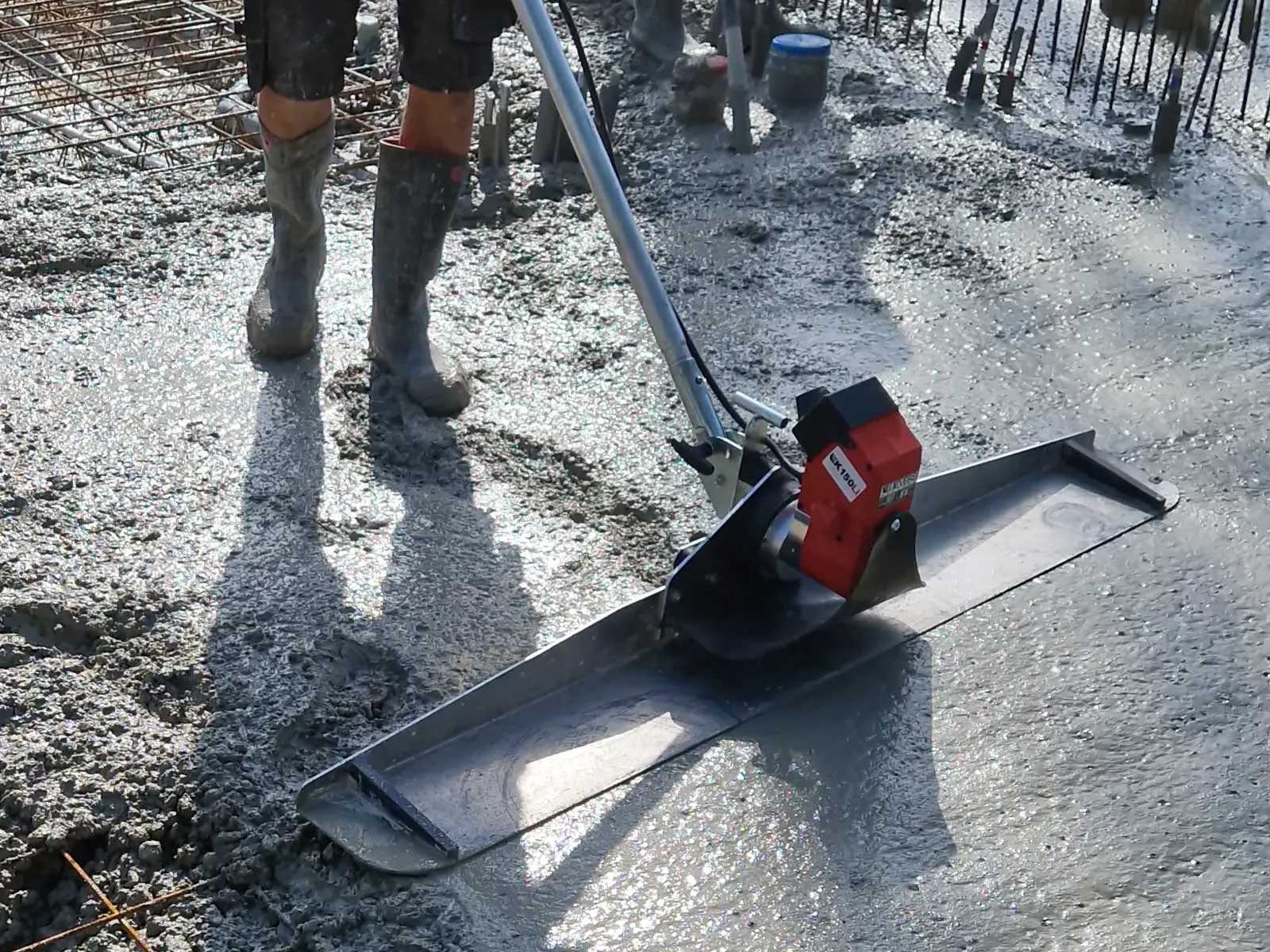
A step-by-step guide to levelling a freshly poured concrete slab with a vibrating screed — setup, the pull-across technique, rail vs rail-free screeds, wide pours, and the right moment to screed.
Read article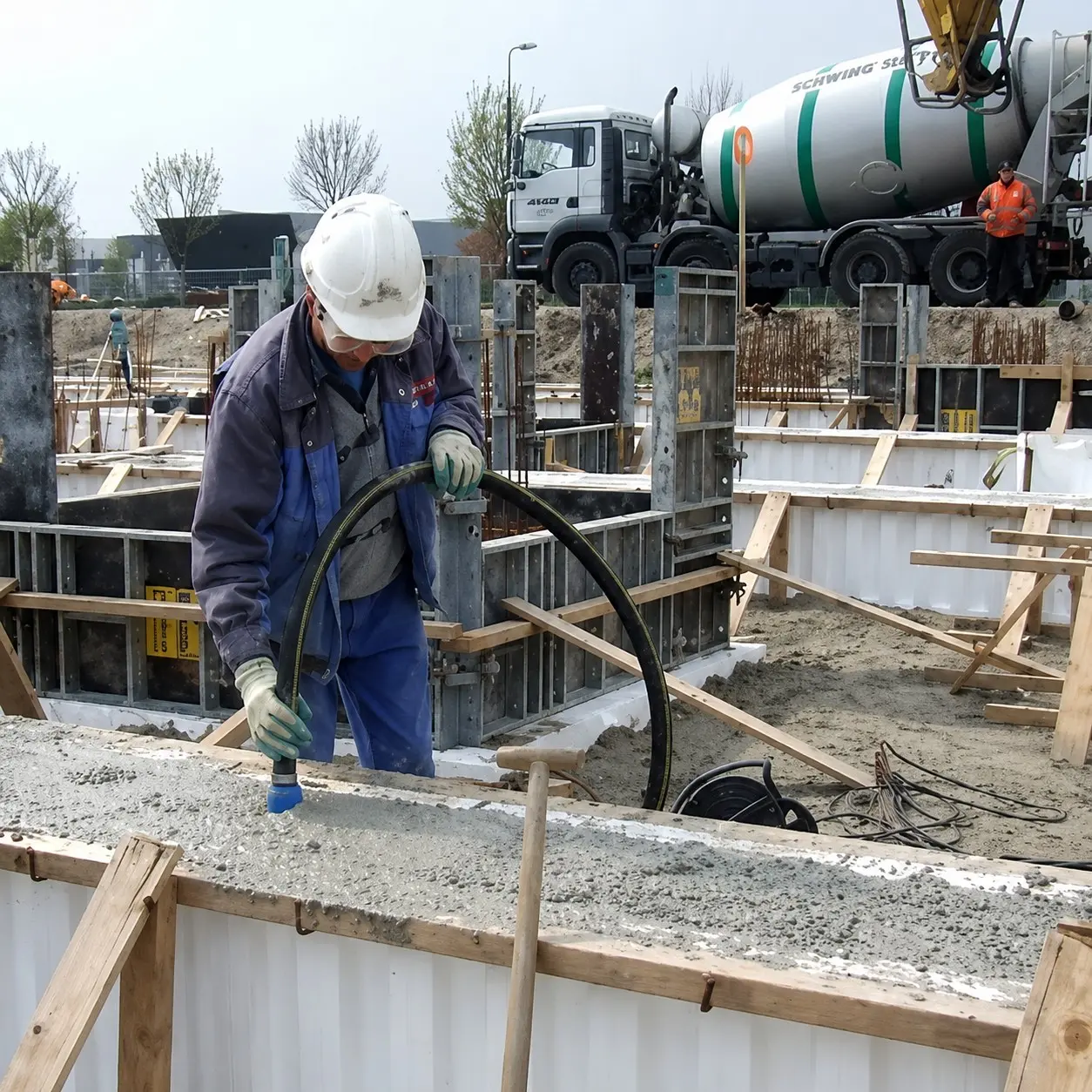 Explainer
A plain-language explainer of poker (internal) concrete vibrators — what they are, how the vibrating head consolidates fresh concrete, the main power types, how head diameter is chosen, and when to use one instead of a surface method.
Read article